Showing posts with label India. Show all posts

Monday, May 15, 2023

The BJP just threw a spanner into the Congress gears, and no one is talking about it.


State elections in Karnataka are over, and Congress has registered a comfortable win. But as usual, two of its most important state leaders have already started a power war for the Chief Minister post. A tried-and-tested solution is to share the CM post with the agreement that one person will be CM for some time and the next for the remainder. Siddaramaiah, the senior leader, has agreed to a two-year term out of five for himself if he gets the first chance. This seems to be a very mature solution, and at first glance, it appears that Siddaramaiah is ready for a ceasefire. But D. K. Shivakumar is not agreeing to this very amicable solution. He wants the CM post for himself.

What might be the reason for this stubbornness? The answer lies in the spanner that the BJP threw into the gears of the Karnataka Congress when they suddenly appointed present Karnataka DGP Praveen Sood as the CBI director. Praveen Sood is the policeman who is accused by D K Shivakumar of being a BJP stooge who registers cases only against Congress workers and turns a blind eye when any BJP workers are in trouble. Shivakumar has openly stated that once Congress comes to power, he will make sure that Sood is terminated from service and arrested. When PM Modi selected Sood as CBI director, it may appear that he was just protecting Sood from the ire of the ruling party.


But that's just the tip of the iceberg. The appointment of Sood is a plan to widen the rift within the Congress party and, if possible, arm-twist some of them to jump on the BJP bandwagon. I believe Siddaramaiah already started playing the BJP script unknowingly when he proposed the two-year CM plan. If Siddaramaiah gets to become CM, Shivakumar has every chance to end up on the gallows because there are already CBI cases against him, and Praveen Sood, who already has an axe to grind, will do everything in his power to make sure he is implicated.

It is only logical that Siddaramaiah will be happy to move Shivakumar out of his way and get to be CM for the full term. So Shivakumar realises that unless he gets to be the next CM, he is in trouble. As CM, if you are prosecuted by the CBI, there will definitely be some support from the party and workers. But if there is no power, no one is going to bother about his fate. Even High Command may feel that it is for good that he is out of the picture. One headache less for them. That is why he is fighting tooth and nail to get the CM post.

An option for the BJP if Siddaramaiah gets to become CM is that it can lure Shivakumar with promises to drop CBI cases if he joins them along with some MLAs loyal to him. In that case, the BJP will surely get JDS support too, because JDS is the real loser in this election. They were believed to be kingmakers. But now there is no value for them in Karnataka politics. In that case, with JDS and Shivakumar's support, the BJP may find it possible to eke out a majority and form a government like they did in Maharashtra.

What if Shivakumar gets to become CM? He will be plagued by CBI inquiries instigated by the BJP. Siddaramaiah may do everything to make governance hell for Shivakumar. I don't think Siddaramaiah may jump ship because there is a high chance that he may get the CM post very soon. Interesting developments are unfolding in Karnataka. Let's see how it finally ends up.

Saturday, May 6, 2023

ഗുരുസാഗരം: ആധുനികതയ്ക്കൊരു ഒറ്റമൂലി?


വളരെ വർഷങ്ങൾക്കു മുൻപ്, നോബൽ സമ്മാന ജേതാവായ ഒരു വിശ്വ സാഹിത്യകാരന്റെ കൃതി വായിച്ചു കഴിഞ്ഞ ശേഷം, എങ്ങനെയുണ്ട് എന്ന് ചോദിച്ച എൻറെ അമ്മാമനോട് ഞാൻ പറഞ്ഞത്, ഇതുപോലുള്ള പുസ്തകങ്ങൾ എഴുതിയ ആൾക്ക് നോബൽ കൊടുക്കാം എങ്കിൽ നമ്മുടെ ഓ വി വിജയന് ഒക്കെ പണ്ടേ അത് കിട്ടേണ്ടതാണ് എന്നായിരുന്നു. ഒ വി വിജയൻറെ ഖസാക്കിന്റെ ഇതിഹാസം എന്ന അത്ഭുത സൃഷ്ടി വായിച്ചതിന്റെ സ്വാധീനത്തിലാണ് അന്ന് ഞാൻ അത് പറഞ്ഞത്. അതിനു ശേഷം അദ്ദേഹത്തിൻറെ പല നോവലുകളും കഥാസമാഹാരങ്ങളും ലേഖനങ്ങളും മറ്റും വായിച്ചിരുന്നു. അന്ന് പറഞ്ഞതിന് ഒരു കുറവും പിന്നീട് തോന്നിയിട്ടില്ല. 

എന്നാൽ കഴിഞ്ഞ ദിവസം ആദ്യമായി ഗുരുസാഗരം വായിക്കാൻ എടുത്ത് കുറച്ചു പേജുകൾ കഴിഞ്ഞപ്പോൾ, ഞാൻ കരുതിയത് എൻറെ അഭിപ്രായം ഒന്നുകൂടെ വിലയിരുത്തണമെന്നാണ്. കാരണം എനിക്ക് ഗുരുസാഗരം തീരെ പിടി തരുന്നുണ്ടായിരുന്നില്ല. നോവലിസ്റ്റ് എന്താണ് ഉദ്ദേശിക്കുന്നത് എന്ന് മനസ്സിലാകുന്നുണ്ടായിരുന്നില്ല. പക്ഷേ പൂർണ്ണമായ വായനക്ക് ശേഷമാണ് എന്താണ് ഇതിൽ പറയുന്നതെന്നും, എന്തിനാണ് ഇത് രചിച്ചതെന്നും ബോധ്യപ്പെടുന്നത്. ഖസാക്കിന്റെയോ അദ്ദേഹത്തിൻറെ മറ്റു കൃതികളുടെയോ യാതൊരു പിന്തുടർച്ചയുടെയും പങ്കു പറ്റാതെ തീർത്തും സ്വതന്ത്രമായി രചിക്കപ്പെട്ടതാണെന്ന് ഇതിൻറെ രചനാരീതി പരിശോധിച്ചാൽ മനസ്സിലാക്കാം. 

ഭാരതീയ തത്വശാസ്ത്രപ്രകാരം മനുഷ്യൻ ജീവിതകാലം മുഴുവൻ കർമ്മങ്ങൾ ചെയ്തു കൊണ്ടിരിക്കുകയും, ഈ കർമ്മങ്ങളാൽ ഉണ്ടാകുന്ന ബന്ധനത്തിൽ മുങ്ങിക്കിടക്കുകയും ചെയ്യുന്നു. എന്നാൽ കർമ്മ ബന്ധത്തിൽ നിന്നും പുറത്തു കടക്കുകയും ആത്മജ്ഞാനം നേടുകയും ചെയ്യുന്നതോടെ അവൻ പരമ ലക്ഷ്യമായ മോക്ഷ പ്രാപ്തിക്ക് അർഹനായിത്തീരുന്നു. ഒരു മനുഷ്യജീവന് തനതായി മോക്ഷ പ്രാപ്തി ലഭിക്കുക എന്നത് ദുഷ്കരമായതിനാൽ അവനെ അതിനു പ്രാപ്തനാക്കുവാൻ ഗുരുവിൻറെ സഹായം ആവശ്യമാണ്. തൻറെ ശിഷ്യനെ ധർമ്മ പാതയിലേക്ക് നയിക്കുകയും ആത്മബോധം നൽകുകയും ചെയ്യുക എന്നതാണ് ഗുരു ധർമ്മം. മലയാളത്തിൻറെ മഹാസാഹിത്യകാരനായ ഒ വി വിജയൻറെ ഗുരുസാഗരം എന്ന കൃതി വായിച്ചു കഴിഞ്ഞപ്പോൾ ഈയൊരു തത്വചിന്തയുടെ കഥാവിഷ്കാരമാണ് അതിൽ അടങ്ങിയത് എന്നാണ് എനിക്ക് തോന്നിയത്. 

നോവൽ ആരംഭിക്കുന്നത് കുഞ്ഞുണ്ണി തൻറെ ദേശാന്തരവാസം മതിയാക്കി തിരിച്ച് തൂതപ്പുഴയുടെ തീരത്തുള്ള തറവാട്ടിലേക്ക് മടങ്ങുമ്പോഴാണ്. വർഷങ്ങൾക്ക് മുന്നേ തന്റെ ആദ്യ ഗുരുവായ അച്ഛൻ ചൊല്ലിത്തന്ന പാഠങ്ങൾ കേട്ട് വളർന്ന സ്ഥലം. ദില്ലിയിലെ പത്രപ്രവർത്തന ജോലിയും അവിടെ നിന്ന് , പരിചയപ്പെട്ട പല രീതികളും, സ്വഭാവങ്ങളും ഉള്ള മനുഷ്യരും, കുറച്ചു വർഷങ്ങളായി കൽക്കത്തയിൽ പിരിഞ്ഞു താമസിക്കുന്ന ഭാര്യയും മകളും, ഒരു ആശ്രമം നടത്തുന്ന തൻറെ ബാല്യകാല സുഹൃത്തും, എല്ലാവരെയും ഉപേക്ഷിച്ചുള്ള ഒരു മടങ്ങിവരവ്. ഇങ്ങനെ ഒരു തുടക്കം വായിക്കുമ്പോൾ നാം കരുതുക നിരാശനായുള്ള ഒരു മടക്കയാത്രയാണിത് എന്നാണ്. എന്നാൽ കഥ അവസാനിക്കുമ്പോഴാണ് ഇതൊരു ഹതാശന്റെ തിരിച്ചുവരവല്ല, നേരെമറിച്ച് ആത്മബോധം ശ്രദ്ധിച്ച ഒരു യോഗിയുടെ തിരിച്ചുവരവാണ് എന്ന് നാം മനസ്സിലാക്കുക. 

ആരാണ് കുഞ്ഞുണ്ണിയെ ഇതിന് സഹായിച്ച ഗുരു? നോവലിന്റെ പേര് പറയുന്നതുപോലെ കുഞ്ഞുണ്ണിയെ ആത്മബോധത്തിലേക്ക് നയിക്കുന്നത് ഒരു ഗുരുവല്ല ഗുരുക്കളുടെ സാഗരമാണ്. തൻറെ ജീവിതത്തിൽ നല്ലതായാലും ചീത്തയായാലും, സന്തോഷം ആയാലും ദുഃഖം ആയാലും, ഒരു സ്വാധീനം ഉണ്ടാക്കിയവരെല്ലാം തൻറെ ഗുരുക്കന്മാരാണ്. എന്തിന് കടുത്ത സമ്മർദ്ദത്തിൽ തന്നെക്കൊണ്ട് എത്തിക്കുന്ന സന്ദർഭങ്ങൾ, അത് മാനസികമാകട്ടെ, ശാരീരികമാകട്ടെ, തൻറെ ഗുരു തന്നെയാണ് എന്ന തിരിച്ചറിവാണ് ഗുരുസാഗരം നമ്മിൽ ഉണ്ടാക്കുന്നത്. 


യുദ്ധം നോവലിലെ ഒരു പ്രധാന വിഷയമാണ്. കഥ നടക്കുന്നത് ഈസ്റ്റ് പാക്കിസ്ഥാനിൽ ആഭ്യന്തര കലഹം നടക്കുമ്പോഴാണ്. ഇന്ത്യ അതിൽ ഇടപെടുന്നതോടെ കുഞ്ഞുണ്ണിയുടെ ജീവിതവും ഈ യാഥാർത്ഥ്യത്തോട് ബന്ധിക്കപ്പെടുന്നു. കൽക്കത്തയിലേക്ക് യുദ്ധറിപ്പോർട്ടർ ആയി പോകുന്ന കുഞ്ഞുണ്ണി തൻറെ മകളോടും ഭാര്യയോടും വീണ്ടും ഒത്തുചേരാൻ ആഗ്രഹിക്കുന്നു. എന്നാൽ അത് ഒരിക്കലും സാധ്യമാവില്ല എന്ന തിരിച്ചറിവ് തൻറെ ജീവിതത്തെ മറ്റൊരു കണ്ണിലൂടെ കാണാൻ അയാളെ നിർബന്ധിക്കുന്നു. പ്രാഗിലേക്ക് റഷ്യൻ ടാങ്കുകൾ ഇരച്ചു കയറിയപ്പോൾ അഭയാർത്ഥിയായി മാറിയ ഓൾഗയുടെ അനുഭവം കുഞ്ഞുണ്ണിയുടെ അനുഭവത്തിന്റെ മുന്നോടിയായി വായിക്കാം. 

ഇഹലോക ബന്ധങ്ങളിൽ നിന്നും, ജന്മാന്തരങ്ങളായി സംഭരിച്ചുവെച്ച കർമഫലങ്ങളിൽ നിന്നും രക്ഷപ്പെടുക എന്നത് എളുപ്പമല്ല. ചിലതിനെ നമ്മൾ എടുത്തു കളയുമ്പോൾ മറ്റു ചിലത് നമ്മളിൽ നിന്നും പറിഞ്ഞ് പോകുകയാണ്. ഈ പറിഞ്ഞു പോക്ക് ഏതൊരു പരിത്യാഗിയുടെ ശരീരത്തിനെയും മനസ്സിനെയും മുറിപ്പെടുത്തും. എന്നാൽ ഈ മുറിവുകളിൽ നിന്നുള്ള അതിജീവനമാണ് മോക്ഷപ്രാപ്തിയിലേക്ക് കുഞ്ഞുണ്ണിയെ നയിക്കുന്നത്. തൻറെ അച്ഛൻറെ ശിഷ്യത്വം സ്വീകരിച്ചുകൊണ്ട് തുടങ്ങുന്ന കുഞ്ഞുണ്ണിയുടെ ആത്മസാക്ഷാത്കാരത്തിന് ആയുള്ള യാത്ര ഒടുങ്ങുന്നത് തൻറെ മകളെ ഗുരുവായി സ്വീകരിക്കുന്നതിലൂടെയാണ്. തൂതപ്പുഴയുടെ തീരത്ത് നിന്ന് തുടങ്ങുന്ന യാത്ര സമാപിക്കുന്നത് തൂതപ്പുഴയുടെ തീരത്ത് തന്നെ. 

പാശ്ചാത്യ സാഹിത്യത്തിൽ നിന്ന് ഇറക്കുമതി ചെയ്ത അന്യതാ ബോധവും (alienation) അസ്ഥിത്വ ദുഃഖവും (existential crisis) നമ്മുടെ ആധുനിക സാഹിത്യത്തെയും ബോധ്യങ്ങളെയും ആവരണം ചെയ്തിരുന്ന ഒരു കാലഘട്ടത്തിൽ ഈ പ്രതിസന്ധികളെ തരണം ചെയ്യാൻ ആശ്രയിക്കേണ്ടത് ഭാരതീയ പാരമ്പര്യത്തെ തന്നെയാണ് എന്നതാണോ ഗുരുസാഗരം പറഞ്ഞു വയ്ക്കുന്നത്? ചോദ്യങ്ങളും പ്രശ്നങ്ങളും മാത്രം ഉന്നയിക്കാൻ പഠിച്ച ആധുനികതയ്ക്ക് ഒരു ഒറ്റമൂലി ഇതാണ് എന്നാണ് കഥാകാരൻ പറയുന്നത് എന്നാണ് എൻറെ നിഗമനം. എന്തായാലും ഇനിയും പല എഴുത്തുകാരുടെ പുസ്തകങ്ങൾ വായിച്ചതിനുശേഷവും ഇവരൊന്നും ഒ വി വിജയന് അപ്പുറമല്ല എന്ന് ധൈര്യപൂർവ്വം എനിക്ക് ഉറപ്പായും പറയാം.  

Monday, April 17, 2023

Book Review: The Covenant of Water by Abraham Verghese

Yes, old man, yes, eyes open to this precious land and its people, to the covenant of water, water that washes away the sins of the world, water that will gather in streams, ponds, and rivers, rivers that float the seas, water that I will never enter.

In the year 1900, at the South Indian state of Travancore, a girl of twelve is married off to a widower of forty who has a strange abhorrence to water. The girl, bought up around water and a devout Christian, survives and thrives in Parambil, when tragedy strikes and secret of a terrible curse haunting the family from centuries is revealed. Thus starts a tale spanning three generations of men and women bound by a covenant of water- the heart wrenching tale of loss, grief, anger, suffering, passion and endurance.

The Covenant Of Water is the upcoming novel written by Abraham Verghese, a Malayali doctor settled in US. I received an advance copy for reading and providing an honest feedback thanks to Netgalley and the publisher.  My primary reason to choose this novel is it being set in Kerala. There are many Malayalam novels that keep a family in its focal point and explore the social, political, cultural and economic situations of the society through its members and their relations with each other and with society. The Covenant Of Water also has a similar plot structure. But additionally there is an element of mystery that is beautifully unravelled.

The Covenant Of Water has a very simple and organic narration style which is descriptive to some extent. It is very atmospheric and to the credit of the writer, the reader can effortlessly envision the environment while reading. This factor becomes essential because geography is also an important character of the novel. The plot is pushed on by its colorful and complex characters and once acquainted, each of them make the reader invested in their motives, actions, consequences and the ultimate destiny. The plot is a huge jigsaw puzzle and it was interesting to see some of the pieces coming together unexpectedly to reveal a bigger picture.

Like action set pieces moving the story in a good action movie, medical procedures are very crucial in The Covenant of Water. The writer has passionately poured out his expertise as a surgeon on its pages. Detailed descriptions of brain surgery, complexities of child birth, skin grafting and more appear more than once. But all these forms integral part of the plot.

If I have to sum up the story of this mammoth 736 pages novel in a single sentence, 'this is an account of the effort of its characters to prevent repetition of history by breaking the cycles to which they are tied to.' Every character finds themselves to be part of a large cycle and are destined to replicate the fate of some predecessor. They are aware of it and are desperate to break the cycle and escape out of it.

The water she first stepped into minutes ago is long gone and yet it is here, past and present and future inexorably coupled, like time made incarnate. This is the covenant of water: that they’re all linked inescapably by their acts of commission and omission, and no one stands alone.


Thursday, March 29, 2018

Cambridge Analytica: The Great Indian Fiasco

Cambridge Analytica, the British political consultation firm is in a soup nowadays. It seems they use the personal details of Facebook users in winning elections for their clients. They are facing criminal charges for this in the USA.

When the news came in, Indian political scene also became muddled (as is the norm nowadays). BJP cited an old article which claims INC used the help of Cambridge Analytica in election campaigns. Rahul Gandhi in turn accused BJP of using their services.

A whistle blower claims that INC is one of the major customers of the firm. Now latest news breaks confirm that INC's campaign poster is framed in the office of the ex CEO of Cambridge Analytica. This remembers me of the infamous scene penis enlarger scene in Austin Power movie. (Check YouTube.)

My doubt is very simple. If you're going by the electoral performance of Congress party in recent years, it is evident that Cambridge Analytica is a huge failure as a political consultancy. And their method of collecting Facebook user identities is not working at all. It even seems to have an adverse effect.

BJP probably should be thankful to this firm, which may be one of the reasons they are in power in majority of India. They are supposed to keep quiet and let the drama continue...

Monday, January 16, 2017

The Sceptical Patriot: Auditing India Facts


Internet is a medium for transmitting information. The problem is that there is no guarantee that it is right information that reaches us. Day by day we are assaulted with loads of data on dozens of subjects and most of them come without substantial proof.

We wisely ignore some of them, like the ones about wives of overturned dictators trying to transfer their ill begotten wealth out of their countries and the ones about Mark Zuckerberg donating one dollar for the cause for every one share or like of a picture. But there are others that appeal to our soft emotions and make us believe them. Finally we end up sharing it and becoming part of the chain.

The Sceptical Patriot is a book written by Sidin Vadukut, Indian blogger, writer of Dork series of satirical novels and journalist, that sets out to evaluate how much truth lies in the kind of forwarded stuff that he has named India Facts. I think there won't be any Indian who hasn't encountered forwarded messages containing list of all things that are supposed to make us proud as Indians. Some examples are the claims that India has never attacked another nation in the last 10000 years, or the claim that it was Indians who invented zero.

The patriots amongst us immediately pat their own back and spread the good words. The sceptics shout aloud that all these are bogus and ignore or delete the message. But Sidin, being the sceptical patriot, took upon himself the task of making the record straight.

When I took to read this book, I was in-fact sceptical about it. Sidin, being a writer of humorous pieces and the task being the inspection of history, I was sure that this is going to be a terrible mish-mash of humour and shallow history. But there was one statement in the introduction that made me feel that my expectations are going for a toss.

"...just when it looks like we have unshakeable proof to buttress some historical argument, new discoveries will come along and make everything before them meaningless."

If he is smart enough to figure out this fact, the uncertainty in finding out what exactly happened in the past, I felt it would be reasonable to give my time to this book. And I wasn't dissappointed. For a book on history that is designed to entertain the reader along with its other goals, The Sceptical Patriot scores.

In ten chapters the author tries to find the truth in as many India Facts. To his credit, he never goes for shortcuts. Most of his missions end in more questions. Some of the claims stand meritorious and some dubious. Most stand in between. Without going for the temptation to proclaim each claim as true or false, Sidin gives them a rating out of 10 according to their truthfulness. I appreciated that element the most in this book.

The Sceptical Patriot is a book that instils in its readers a sense to question the knowledge bequeathed through internet and to gauge its merit instead of blindly choosing to believe or deny it.

If you enjoyed reading this post, don't forget to share with your friends and spread the pleasure.

Buy the book :

Sunday, January 8, 2017

Durbar by Tavleen Singh: Criticism of Dynasties


Years back I had read a book called Political and Incorrect by journalist Tavleen Singh, which was a collection of several of her articles written for various periodicals. I loved her integrity after reading it and started following her articles through her twitter account. Now I got a chance to read another of her book Durbar, which is about the situation of our nation when late Rajiv Gandhi was our PM.

Durbar is a scathing criticism of Rajiv's tenure as Prime Minister and of the dynasty politics. Tavleen Singh establishes how most of his decisions and actions costed India dearly in home-front as well as in international arena. The book starts by explaining the situations during the assassination of Indira Gandhi and the infamous killings of Sikhs that followed. While it was declared that Rajiv was going to be the prime ministerial candidate, even after his justification of the killings, general feel among public and media was that he was capable of changing the course of our nation for good. But it was not to be.

The book is a chronological account. It has the feel of a memoir and not that of a political discourse. This vastly improves the readability of the book. The author had personal connection with Rajiv and Sonia Gandhi and she is able to give a lot of insights into how their relationship worked. Her interactions with different players of the time and their perspectives makes it all the more interesting. I was impressed by her adventures inside the Golden Temple.

Another positive of Durbar is the objective stand that Tavleen takes. She doesn't criticise for the sake of it. I still felt the account just skimmed the surface of the time period and lacked depth especially while dealing with the case of Bofors scam.

BUY THE BOOK:

Monday, November 21, 2016

Truth, Religion and Sun Rise...

Today morning it so happened that I shared some pictures with inspirational messages over Facebook. I do that regularly, when my eye catches something that I feel is relevant and to which i agree, I share it. One of which was this:


I received immediately a comment from one of my dear friend who is an atheist. Now, that comment became the cause of a pretty long conversation that really stimulated me. I love it when I get an opportunity to arrange my scattered thoughts and give it some form. I thought I will reproduce it over here as a blog post have more permanency than a Facebook post. I am indebted to my friend for this conversation and I sincerely hope he will not mind me using his words. I have done some editing to the conversation just to maintain the flow. There were instances were both of us commented together about different aspects of the topic.

In the below transcription, F stands for my friend and M for me.

F: As per you, are the religious priests doing truthful job??

M: Are doctors doing truthful job prescribing drugs with side effects? Are teachers doing truthful job telling kids that sun rises in East and sets in West, which is factually wrong? Are advocates doing truthful jobs when to save a client manipulation of truth is done? Are politicians doing truthful job, are engineers doing it, are govt servants doing truthful job?

F: No government will allow life threatening side effect wala drug in the market and how will the doctors prescribe them??

M: So no prescribed drug has any side effects?

F: No society which depends on logical thinking will allow to teach Sun rising east and setting west story. Deeply religious poisoned country like ours still teaches such nonsense..

M: So teachers are liars.

F: Religious dominated system is a lie.

M: So no prescribed drug  has any side effects?

F: I already answered this. (About advocates) There can be 2 sides for every story. Advocates try to establish their truth. Finally the truth based on evidence wins

M: But one of them is a liar. 50% advocates are liars.

F: Oh man.... I already answered to this advocate issue as well...

M: I never told about life threatening side effects (of drugs).you assumed it. Just side effects. Yes as per you 50% advocates are liars.

F: I can read self conscious cheating on all your answers because I know that your intelligence level is much better than in these answers... :)

M: Didn't answer my drug question. Aren't doctors prescribing drugs with side effects. Not life threatening may be.

F: Instead of asking counter questions, why don't you give direct answers to my question, if you have..... :)

M: My answer is there in those questions.

F: Counter questions are answers??  :)

M: Can be. If you can read between lines.
Now if you cannot do that, take direct answer.

Doctors know that painkillers have side effects. Still they prescribe them in limited quantities.

Teachers know that the statement sun rises in East is a lie. They teaches that to small kids because to make them connect with the world as they perceive. Later when the kid grow and learn more about solar system he understand that we perceive it only in earth. But when you take the bigger picture truth shifts.

Advocates help their client not by telling lie but by manipulation of facts. In their perspective they are doing their work.

So none of them are liars.

Religion is required to weak minded people in small doses (with side effects included) for quick relief. Religion is fatal in bigger doses like paracetamol is.

For common people to reach the bigger realm of spirituality some lies are told first. When they matures, they realise that miracles and beliefs are just hokum and your self (spirit- whats inside you) is your master. It is the mastering of your self (who is your master now) that is important and not fighting about what meat to eat or which direction to face while praying.

For people suffering from inner guilt religion slightly manipulates the truth, like advocates do. They get ready to face the world believing some bigger entity has removed their guilt.

(Once I get a reply and if this conversation continues I will update the post.)


Wednesday, November 9, 2016

It's All In Black & White

People don't have any idea what's black money. Guys remember last month when you checked out of that hotel, the receptionist asked you if you need tax bill and you said you didn't need bill with a smirk? The Rs 2000 that you paid became black money the moment it was gone from your hand.

Or that Rs 100 you paid for a pirated dvd on roadside yesterday. That became black money and is now on its way to help drug Lords & terrorists break our nation apart.

Or that medicines you bought without tax bill and that electronic shaver which you bought from smuggled goods store. The money that you handed out is black money now.

You bought a piece of land showing paper value 5 lakh and paid 40 lakh. 35 lakh that you paid has now become black money...

That donation you paid without receipt to secure a seat for your kid in that posh school and that 500 that you paid the policeman to escape from his long hands has also became black money.


What happens is that all this amount moves out of the mainstream economy. Then it starts it's journey towards its masters. Because once it moves out of control all transactions that use this money will be nefarious,  illegal ones. Finally it reaches the coffers of hoarders. For hoarding money, obviously you need bigger denominations like 500 and 1000s. Now when these denominations are banned, suddenly all these currency gets worthless. But for all those who have genuinely earned white money, government has given chance to deposit in banks after revealing source. 

But it becomes impossible for black money to get legitimised because it's tough to reveal sources. May be a small portion may escape.

Now government has a clear account of how many 500& 1000 Rs notes is in circulation. It has to just check how much is returned to it. Remaining is a deficit which government can compensate by printing new currency. And this currency can be used for developmental and beneficiary purposes.

So any unaccounted money acquired illegaly gets back to government in a single stroke.


Saturday, June 20, 2015

A long and mostly pointless rant on food.

Some days back I saw a news report on a television channel that compared the vegetable prices in different parts of Kerala. The reporters purchased vegetables worth Rs.100 from a border village in Palakkad. They travelled with it to Thrissur and enquired in a wholesale shop about the cost of same amount of vegetables. It was around Rs.180. At Ernakulam, the price of Rs.100 worth of vegetables from Palakkad was Rs.280!

For some days I couldn’t help thinking about various aspects of this information. Most of the vegetables that are consumed in Kerala are cultivated in Tamil Nadu. That explains the cheap rate in border areas. The cost increases as the produce travel more distance. What may be the reason for this difference? Transport cost obviously. Just that, or is there more to it? What about the risk factor involved in transporting products of lower shelf life that may get spoiled by the time it reaches end seller? And what about the extra care to preserve them- an extra dose of pesticide or refrigeration? In that case, what about the additional risk on the health of consumers?  Is there any other social reason for the price in Ernakulam to be so high; may be the fact that it is a more developed city than others?

One solution that I could think of was reducing the time taken for transporting the produce, thereby reducing risk of spoilage. The obvious solution is to invest in infrastructure. Better road connectivity between towns can reduce shipment time. If good highways are made in which vehicles with heavy load can safely travel at high speeds, more goods can be transported in lesser time. Instead of transporting small quantity of goods in old worn out trucks, an efficient collection system can be put to place that aids in amassing huge quantity of produce and they can be shipped using improved fuel efficient carrier vehicles with refrigerated containers. Though the cost of investment in all these setup will be passed on to the end users, after a certain period of time this may prove beneficial.

On further thoughts, I felt that there can be another alternative, one which can totally eliminate or reduce considerably the need to transport vegetables. It is by local production and distribution, which was the way things were sometime back. At present, in between the farmer and buyer, there are at-least four agents. Firstly collection agents purchase goods from farmers and sell it to the distributor. The distributor dispatches it to wholesale merchants of different cities. The wholesale merchants receive them and divide it for distribution in different areas in their respective localities. Ultimately the retailers who get the load from wholesalers sell the vegetables to the consumers. This system adds on the overheads and risks of all the involved agents into the picture, thereby increasing the price of the goods substantially by the time it reaches end consumer. Inventory cost and transportation cost add on the final selling cost along with the expense of extra processing for preservation.

An alternative to the existing system is, as I mentioned before, to produce and distribute groceries locally. For that purpose primarily people has to be given motivation to cultivate products that are necessary for their consumption in their backyard or balconies or terrace. This is in-fact happening in many households already. I have seen people purchasing cauliflower and capsicum ignoring papaya and jackfruits growing abundant in their own backyard. The problem is we all need exotic food. In a recent past it was a luxury, but now it is the norm. If a mother makes papaya curry for two days, kids and husband start protesting the next day. They demand for something different and exciting daily. We eat Chinese, Italian and North Indian cuisines, but forget our healthy ancestral dishes that can be made with ingredients that grow or can be easily grown in our backyard. There are eateries that sell local dishes but they charge a premium. Locally cultivated, organic vegetables can be purchased from market but at a premium rate.

It is this situation that needs a change. Every household has to be trained to cultivate some part of their diet taking into account their space constraints. Also support has to be provided to market the excess crop left over after consumption at the local market in a cheap rate. This gives additional income to the growers. Indigenous food products and dishes have to be promoted and their health benefits explained. This motivates people to purchase them and support the local market. Processed food should be manufactured and marketed only locally so as to reduce the need of preservation. Elimination of preservatives reduces the use of chemicals and ultimately contributes to a healthy society. Cost of the produce reduces dramatically as the transporting overheads and risks are considerably reduced. As everyone is at the same time a producer and consumer, society becomes more interactive and closely knit.

But who will tie the bell on the cat?

Monday, June 1, 2015

Achcha Din Continued: Family Troubles

Read the beginning of Achcha Din with Railways.

Thus I boarded the train, pissed off after paying the exorbitant fare, into the stinking sleeper class coach. It was the end of the summer vacation and hordes of families had occupied many berths- most of them travelling till the final destination. It was evident that they had all reserved their tickets and were assigned with berth numbers. A few of us short distance travelers- if you can call 200 plus kilometers as short distance-, ones without any berth numbers but possessing perfectly valid albeit overpriced sleeper coach tickets, were looking to get ourselves accommodated in any vacant seats, leftover by the multitudes of ladies, kids and gentlemen.

It was strange. If anyone looks from outside, from the platform, they may feel that the train is almost empty. But I had a tough time finding a seat. One reason was the peculiar, unaccommodating behavior displayed by families. Once they occupy some space, they never allow an intruder. If you are familiar with sleeper coaches, you may know that six berths- two lower, two middle and two upper berths- forms kind of a territory, with two berths on the opposite acting like a door or a lid. The intended practice is that, in the day time all the six passengers are to use the lower berth for sitting. If anybody feels like having a nice siesta, they can use the upper berth. The middle berth, the hanging one that can be used as a cushion for the lower berth when it is used for sitting, is usually erected only at night, after all the passengers come to a silent mutual agreement to call it a day. 

But once a family finds its assigned berths, they put all their luggage- a tremendous load by default, on the upper berth. Then they take up the lower berth. Kids start playing their games taking up the most of the available space, periodically disturbing the elders only when any vendor passes by. At least one woman, in many cases all of them, stretches legs, and slowly assumes any of the postures of a deep slumber, occupying any left over space. Menfolk take off their shoes, unbutton partially or sometimes fully their shirts, lift their legs onto the seats and attain an impromptu yoga pose.  The middle berth in many cases is just left hanging, but sometimes it can be observed that even they are occupied, virtually negating any possibility for a passenger possessing day-time ticket to sit on a vacant spot. Ultimately, in seats that can accommodate 6 grown up passengers (8 if you consider the upper berths too), it happens that only three or four people take up the entire area.

Now if you want to get a place to sit down, you have to ask any of them to adjust. You ask them politely to move a bit and the family head jerks his head suddenly towards you, staring with disbelief. It seems as if you have asked for a plot on his family land for free. Women try slowly to move their legs, as if to make some space with much difficulty, but stops midway and continue their slumber. The kids don’t even acknowledge your presence as if you are the Hollow Man.  You are left standing there for some moments, stupidly looking at each of them and eventually making a slow retreat.

In my case, I tried to get on an upper berth finally. When the family-head, who seemed to be in a Samadhi state, jumped up and yelled that the berth was theirs, I asked him to come and sit there if it was his. That settled the matter, somehow.

Friday, May 29, 2015

An Achcha Din With Indian Railway

A few months back I had commented to someone about a marked improvement that I observed with the railway infrastructure. Stations, coaches and even railway lines were kept cleaner, considerably improving the whole experience of travelling on rails. Even the affair of consuming rail food, the quality of which stayed in the same dismal state, was less unpleasant thanks to the absence of stink.

Today, when I ventured on the platform of Ernakulam Junction station, I was overcome by nostalgic feelings from a bygone era, when welcomed with the strong smell of garbage and piss. I was travelling to Thalassery, a tough journey when you consider the intense summer heat that is again doubled by the railway coaches that are ingeniously constructed using materials which are the highest conductors of heat making you remember the images etched into the minds of public by a certain Mr. Dante. Adding to the heat  is the perplexing railway schedule that somehow manages to consistently stop the exact train in which I get in to make way for every other trains that cross us, making the actual journey time taking double than the announced.

But today when I got into the train I had a bigger reason to be pissed off. It seems the rate of sleeper coach tickets when purchased on the spot for day time journeys has been insanely increased. That means a Rs 110 sleeper coach ticket will cost me Rs 195 now! This, for a service that no one uses, because nobody in their right mind will sleep in a daytime journey for reasons that I already detailed. Its a perfect recipe for certain harakiri. Buying general class tickets is out of question as most express trains have just two general coaches- three if we consider ladies' coach, but that one is out of bounds- in both extreme ends and they are filled in light speeds. There are atleast 12 sleeper coaches, most of which are either empty on day time or filled with passengers with general tickets.

Now if I am doing an advance reservation for sleeper tickets it will be costing me much lesser even with the reservation charge added in. But this is not possible when an unplanned journey has to be made in an emergency situation. So what railway essentially want is to squeeze passengers who are out of possibilities to make them part with as much money as possible. And the services are back to the terrible and despairing state it was in before.

A more ethical way to fill raiway coffers would be to make the employees stand on the exits with daggers and guns and extort money from exiting passengers threatening them of dire consequences...

... My Achcha Din has just begun. Will continue once I get chance to recharge the cell batteries. I found a plug point on train but as expected it doesn't work.

Its here..

Thursday, April 23, 2015

Book Review: Autobiography of a Mad Nation by Sreeram Karri

I was born in a mentally retarded country.

Sreeram Karri's explosive novel, Autobiography of a Mad Nation starts with this sentence. It gives the feel that this is going to be another long rant about all that is wrong with contemporary India. And it is, in a way. But on careful reading of the book we find that, what shines beneath is pure love for the nation. The novel, published by Fingerprint is longlisted for MAN Asian Literary Prize.

The novel starts with a rant by a young aspiring writer, Vikrant in death gallows awaiting President's mercy. Retired CBI chief Vidyasagar sets forth to find the truth by doing an unofficial investigation after a request from the President. He discovers that it is not a one off incident and there is more than what meets the eye to be discovered. A group of influential men are running manipulations behind the screens an trying to alter the course of Indian history. Is it for good or for bad?

Autobiography of a mad nation is a murder mystery in the outset. At the same time it serves as a look back into the bizarre and insane past of our nation. On one side a fast paced story unfolds parallel to the important historical incidents fom Indira Gandhi's emergency to Gujarat riots, while on the other we are served with some honest social an political observations that need not be on the politically correct realm.

The novel has a nonlinear narrative structure which unfolds in two paths- one is a first person narration of the fictional novel written by Vikrant and second is the actual story of the murders, coverup and investigation told mostly in flashbacks. The narration is stylish and intense. There is no doubt that Sriram Karri is a gifted storyteller wih enough honest passion to make the reader careful for his story and even gives it a serious thought while enjoying it.

The author should be appreciated for his guts to criticise the harmful elements of society without any political or religious bias. Many of the readers will surely be offended by the courage of Karri to call a spade, a spade. One complaint that I have to make is about the solution that the novel hints. I feel it may be ineffective, even extremely dangerous in long run. Yet I enjoyed reading this well crafted, powerful novel about contemporary India and would recommend it to anyone who feels at any point o time that they're living in an insane nation.

Book source: Publisher

Saturday, April 18, 2015

Book Review: Warrior by Olivier Lafont

Books based on Indian mythology is a rage these days. One recent entry into that long line is the mythological fantasy novel Warrior written by Olivier Lafont and published by Penguin Books. Olivier Lafont is a French actor and writer residing in Mumbai. He has acted in many movies and ads. If you want me to pinpoint, he's Kareena's fiancée in 3 Idiots. To be sincere, that was one of the reasons why I agreed to review Warrior, another reason was Penguin being the publisher of it. Some of the best books that I read from my childhood were Penguin paperbacks. Let's see how Warrior stood up to my expectations.

Saam is the son of Destroyer, God Shiva. He is an immortal demigod, living in disguise as a watchmender on Marine Drive, with his mortal mate Maya. One fine day Apocalypse strikes when a faceless enemy triggers a chain of events. Probably Saam is the only one who can avert the end of the world, but for that he has to race against time and find the clues from the long lost Kaal Veda. Joining him are six other companions, some of whom he can barely trust, like his half brother Ara, the spider.

Lafont's hero Saam is the typical brooding, soul-searching, wounded-by-the-past kind of super hero of our time. The other motley characters of the novel also follows existing super-hero/fantasy protocols to the book. But the author succeeds in making them endearing to us by painting them in every extreme shades possible. The varying kind of insanity prevailing in each one of them makes us overlook the familiarity. I especially loved the reckless Ara, with his sarcastic comments and Fazal, the only somber entity in the lot, who strangely become pivotal to the plot many a time.

The plot is epic in scale and covers a lot of geography and history. From Mumbai China to a parallel universe with perpetual fighting machines as inhabitants, from present day to British Raj to the rule of Ming dynasty, the scope of the novel is vast. Writer also touches various subjects on his way- mythology, ethics, time travel, science, romance and politics being only some of them. He succeeds in skillfully interweaving all these into his plot without making the reader feeling bogged down.

I also loved the author putting a sudden break to the relentless initial pace by making all characters assemble in a timeless world. It dragged the narrative a bit, but the insights gathered there helps the reader to appreciate the later developments fully. It also adds a certain depth to the plot. Warrior can be a delight for fantasy-science fiction lovers thanks to the thick, satisfying plotting.

Book Source: Author

Thursday, April 2, 2015

The Comment by Giriraj Singh and The Fair Game

“Agar Rajiv Gandhi koi Nigerian ladies se byaah kiye hote, gori chamra na hota, toh kya Congress party uska netritwa sweekarti kya?"

Union minister Giriraj Singh uttered these lines last day and following his universal condemnation, even from his own party, has expressed regrets. As a responsible leader, he should never have said something like this. Anyone can see through the racist tone of his remarks.

First thing, it is wrong to generalise a women of one nationality and secondly he spoke of them in degrading tone. Third issue is that as Sonia is holding a responsible position from several years now and has proven her mettle, it is ridiculous to opine that her merit is her skin color. So it is indeed a shameful, politically motivated, sexist and racist remark that the minister made.

Being settled on all that, let us just go a bit more deep into his statement. If hypothetically we imagine that Rajeev Gandhi had indeed married an African and if she is as qualified and skilled as Mrs Gandhi is now, would we as a nation had given her the same level of acceptance? Just give it a thought with all your heart, with all your sincerity.

It is a known fact that Indians have an obsession with fair skin. A fair skin is our first identity of beauty, of innocence, of charm. We need our female actors and cultural icons to be fair skinned. In our market are numerous products that promise fairer skin to its customers. On our TV and other media we encounter ridiculous advertisements that praise the benefits of fair skin. And many of us shamelessly buy and use them, fully aware their promises are empty. Engaan biriyani koduthaalo?

After condemning the minister for his irresponsible remarks, it will also be worthwhile to just look into the Pandora's box that he has opened. In it we may find a face mirror and on that mirror we may see a hideous face staring back at us.

Friday, March 13, 2015

If Intentions Could Make Classics...

This review of three books are pending from some time. I received them at least a month back, after replying to the mail from Mr Santosh Avvannavar, requesting an objective review. All three are very short reads, the longest one falling short of 130 pages. My first impulse was to go for three consecutive review posts, one for each book. But after reading all three, I felt it would be well to make a single post. All three books has many similar characteristics, that even if one combine the three into one book, the effect will be much the same.

I would begin with the best of the three. Black, Grey and White has an intriguing title and a pretty great cover. The book, co-written by Santosh Avvannavar and Santosh I Biradar, claims to be written for the purpose of spreading awareness on AIDS, thereby creating an opportunity for public to unite in fighting against it. The title alludes to three ages of human life- young, middle and old, and that nobody is spared by this menace. The book contains five fictional stories, the base of which are obviously true accounts. The first story Shahid- The Martyr, is about the spread of myths and superstitions in society related to curing of AIDS and how innocents fall prey for it. The second story Chintu; The Earth Is Round is about the plight of innocent orphan kids affected by AIDS, due to their parents and the outlook of society towards them. A Game of Life, Lust and Death is about a model who uses her disease to exact revenge on the sex racket who spoiled her sister. Highway Sex a story about rampant spread of AIDS through highway drivers and the effect on their families. Last story Abram & His Prodigal Son is a take on the biblical story into modern times.

The second book Title is Untitled, co-authored by Santosh Avvannavar, Kundan Srivastava and Raghunath Babu Are, takes on some important social issues plaguing our society- rape, trafficking, child marriage and such. The unusual title of the book has a reason- it points out how the victims always lose their titles and eventually becomes untitled entities. Compared to the first book, the premise of the stories and their tone has good variation in this volume. It has eleven stories, each one pinpointing one social evil. Each of the stories work as case studies and provides some insight for the reader.

Third book Surrogate Author, co-authored by Santosh Avvannavar and Shilpa Patil, is intended as a satire. It is a parody of the classic romance Devdas. It is the story of Authdas, an aspiring writer struggling to complete his first book Paru. His failure, caused due to the pressure for pursuing a career in Engineering, exerted by his parents,
results in heartbreak and his meeting with poet- prostitute Chandramukhi. Surrogate Author is thankfully a very short book, just 30 pages, though even in its shortness it is drag. It terribly fails to convey anything worthy to the readers who invests their time on it and in turn adds to their confusion.

I liked the first two books for their intention- a very noble one indeed, of making readers aware of several evils in society. But in general, I feel they deserved much better writing. I am afraid to say that I did not like the playbook like conversational structure in them that fails totally in building premise and character to stories. A regular story structure could be much more effective, as is seen in the story about Chintu. Severe grammatical and spelling errors hampers the reading pleasure. Also playing spoilsport is several repetitions- of words, phrases, total sentences and even situations in the narratives. These books are to be edited seriously..!

I appreciate the intention behind the books- it is a commendable effort. But for it to be effective and worthwhile, I feel some serious correction work is due. Because only good intentions never make classics.

Thursday, September 25, 2014

A Time When Scandal Drove and Science Took Backseat...

Saw an interview of Nambi Narayanan on TV yesterday. One of the most talented scientists ever born in our country. And also one who was the most vilified wrongly for political gains. With decades of experience behind him, he was heading a prestigious project of ISRO when he and some others were arrested in 1994 for suspected espionage charges. Even before the court took up the case, media pounced on it and pronounced the accused as wrong doers. Espionage case or chaarakkesu as Malayalam media termed it, was celebrated by all when the involvement of two ladies from Maldives gave it a sexual angle.

The presence of a top cop who was close to then Chief Minister was used by opposition and factions within the ruling party to revolt against him. CM had to resign following allegations that he was aiding the accused. Case was transferred from local police to CBI. They found out that the case was false. Media, public and politicians were dissatisfied and wanted a reprobe. When State Government ordered local police to take up the case again, all accused approached Supreme Court. In 1998 SC cancelled the probe and directed the government to compensate the accused for their physical and mental sufferings -which was never done. Another direction from SC was to probe and bring the culprits who were responsible for fabrication of the case, which also is not done yet.

If we go in depth, we can find many behind the screen maneuvers that made the case sensational in public eyes and pronounced Nambi Narayanan and co-accused as monsters who betrayed the nation. Media gave enough publicity by peddling half truths and outright,  made up lies just to increase their circulation. Rivals of CM- in his own party and opposition used the oppertunity to evict him out of power. And we the public, ever hungry for scandals, fell for the propaganda.

But why this false accusation was made first of all? The Wikipedia page of Nambi Narayanan give the crucial clues. I will reproduce the excerpt below:

"In 1992, India had signed an agreement with Russia for transfer of technology to develop cryogenic-based fuels.The agreement was signed for Rs 235 crore,when the US and France were offering the same technology for Rs 950 crore and Rs 650 crore respectively.Documents show that US president George H. W. Bush wrote to Russia, raising objections against this agreement and even threatening to blacklist the country from the select-five club. Russia, under Boris Yeltsin, succumbed to the pressure and denied cryogenic technology to India.To bypass this monopoly,India signed a new agreement with Russia to fabricate four cryogenic engines after floating a global tender without a formal transfer of technology.Isro had already reached a consensus with Kerala Hitech Industries Limited (Keltch) which would have provided the cheapest tender for fabricating engines.But this did not happen as the spy scandal surfaced in late 1994."

When we take into consideration the fact that Nambi Narayanan was the head of cryogenic in ISRO, dynamics become clear.

What were the ramifications of the scandal? ISRO, a premiere research organization lost its credibility within and outside India. Several breakthrough technological projects were delayed or stalled pulling Indian space research back, severely hampering national development. Scientists were generally considered unreliable by public. Science as a discipline, lost its sheen. Youngsters found a profession in research in India unsafe, giving one more excuse for brain drain. Ultimately we, Indians lost.

It took huge hard work of decades and today ISRO is back in limelight with the phenomenal success of Mangalyaan. You may think on this great occasion why I am retelling this sad tale. Its not for taking the gleam out of victory celebration. This story should be engraved on all of our minds, so that we as a nation, irrespective of our ethnic, cultural and ideological differences, stand behind the people who are striving to make a positive difference in our lives.

Tuesday, September 23, 2014

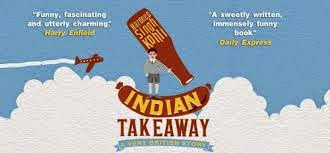
Indian Takeaway- In Search of an Identity...

Last year I happened to read an incredible book by Monisha Rajesh in which the British Indian journalist goes on a journey through the length and breadth of India in trains. It turns out to be a self revelatory experience. Now this 2008 book, Indian Takeaway is much similar. Here, a Scottish journalist of Indian origin, an amateur cook, travel across India cooking British food for locals. He does it in the belief that this exercise can reveal his true identity.

Hardeep Singh Kohli is a journalist and TV personality. He is also an amateur cook. He was brought up in Glasgow by his immigrant parents. In his childhood, to his surprise, he was treated as an outsider due to his Indian ancestry. But his views, interests and allegiance were very British. This duality made him undertake a journey through different cities of India, and cook a British dish at each city. Read the book to find out if anything comes oyt of this exercise.

First thing that strikes the reader about this book is the honesty that the writer brings on the table. About his feelings, cooking, family, culture, things he sees and has to undergo on course, Kohli writes openly. There is an incident in the book where he is not sure about his train reservation and worries about journeying in third class. Any other person would have sugar coated the whole thing, but Kohli doesn't. He openly declare his fear of 'the girl who is eating mango and the old woman who sleeps on floor'. At first I felt it insensitive, but who am I to judge!

Second best are his descriptions- about journey, places, people and more importantly about food and cooking. He masterfully builts up the atmosphere, so that the reader finds it easy to understand his thinking. There is a liberal dose of humor sprinkled in the narrative. Some of it works, but some falls flat. Certain anecdotes and attempts on word play, doesn't gel with the content of the book. Another major issue for me was 'the Kohli Family Trivia' which severly hampers the flow of the book in many places.

Overall I felt it to be an interesting read and may be of interest to foodies and travel enthusiasts, though the final outcome, whether Kohli was able to find out who he really is, turned out to ambiguous.

Sunday, July 6, 2014

The Sunday Tweet War

Normally I never go for an argument with strangers, not in real life, never in cyberspace, especially about politics. Because it never changes a thing, other than generate lot of negativity. Today was an exception. I was doing my regular twitter rounds when I reached the timeline of Indian National Congress. For one of their tweets, I replied.

INC tweet:
#TheIndiaTheyInherited - Due to pro-poor UPA policies
More homes turn to PDS; wheat off-take triples since 2005 http://t.co/vvioayfqzg

My reply:
@INCIndia real progress is when common man has disposable income not depending sudsidized food supply

After minutes of posting that I got this reply from Mr Nikhil which started this conversation:

Nikhil: till then? Should we leave poor dieing without food n shelter? We must appreciate good work done by UPA in last 25 yrs

Me: We are a free nation from 65 years. Why still there are poor dying? Till when this will continue? The only way out is to give poor a fishing rod once and for all, instead of a daily supply of fish.

Nikhil: yes, agreed with this too. For the same reason Rojgaar yojna n mnrega by UPA. We must appreciate Manmohan and his team

Me: Any yearly  study done how this scheme has benefitted economy? Or was that another handout? Is there an upgradation in skills of the people in this yojana?

Nikhil: People got jobs, spending power increased, so increased demands, to fulfill demands, more supply, thus more jobs.

Me: a link pls.

Nikhil: UPAs reforms n policies are always inclusive and conducive to kickstart the sluggish economy. Hats off to Manmohan.

Me: Why economy is still sluggish and not kick started yet?

Nikhil: Good schemes take time to flourish n reach the people. Many people opposed the computers and IT initially.

Me: How many years? 10 not enough? Then y INC criticising the new govt which is month old?

Nikhil: Instead of bluntly blaming, we should analyze the challenges n conditions before 65 years to realize INCs contribution

Me: I am not blaming. Look the election results.

Nikhil: agreed with this too. Thanks to Nehru for making India truly democratic. So we should respect the mandate.
We must respect mandates in 65y, MMS got 2nd term. IG was PM for 15y, JLN was PM for 17y. Why? They performed well.

Me: So we can conclude that UPA II was a failure as the result was disastrous. PM who performed well got repeat mandate. (Ur words). UPA2 did not get another term. Bcos of non performance.

Nikhil: Good to see that you come down from 65y to UPA2. Not at all disastrous, but few things mishandled. Corruption n Anna.

Me: was using ur logic n assuming the govts that got repeated mandates did well. few mishandling cost you an election?

Nikhil: UPA1,2 performed tremendously well but failed to project their achievements. They should learn Modi style of marketing

Me: So now u r not respecting mandate. U accuse people where manipulated?

Nikhil: Lets give some time n wish bestluck to Modiji. Lets hope he continue on the path defined by Manmohan Singh.

Me: Let's do it. I hope he doesn't repeat the grave mistakes of previous govts.

Nikhil: Not manipulated but Modiji succeeded in projecting that last 65yrs were disastrous due to Congress. Which is not true.

Me: So who were responsible?

Nikhil: Obviously UPA, but not everything was as disastrous like Modiji projected during his campaign. UPA should introspect.

Me: Supposing Modi has projected a 100% disaster rule by UPA, how much of a disaster it actually was?

Conversation continues.... Will update later.

Wednesday, June 11, 2014

India's Biggest Cover-up by Anuj Dhar

As per Anuj Dhar, the biggest cover-up that occurred in post-independence India is the truth behind the alleged death of Subhas Chandra Bose in a plane crash in Taiwan. He and his colleagues are relentlessly following up and even fighting sometimes with Indian and even some international governments for an unbiased final investigation and acknowledgment of truth behind the mystery along with the declassification of several confidential documents with the government so that the ambiguity among the mind of Indians about the fate of one of the biggest patriots is cleared. India’s Biggest Cover Up is a work that covers the history and most of Dhar’s research work about the mystery.

The book gives a chronological narrative of the mystery. It starts with the official account about the plane crash that allegedly resulted in the death of the founder of INA and Forward Bloc, Netaji Subhas Chandra Bose. Thereupon it describes several Government investigations and their findings on the case. It also deals with many related stories that compound the mysteries surrounding Bose like the treasure of INA, which Dhar suspects was looted by some former INA people themselves. There are also the details of sightings of Bose included- like the Shaulmari baba or the more probable candidate Bhagawanji.

The book questions the official line endorsed by each of the Indian governments till date and suspects foul play by vested interests in covering up the facts wantedly. Dhar also suspect foul play in keeping many documents related to Bose mystery as classified and so top secret that if leaked they have the potential to compromise national security. Dhar has pointed out several inconsistencies and serious errors in the investigations by various commissions that were neglected while concluding to make the end result fall in line with the official version.

To the credit of the author, he has presented his case really well and without any loop holes. Inclusion of several photographs and images of declassified documents and commission reports shows the amount of painstaking research gone to the writing of this book. Another positive factor that I noted while reading this book is that the author has taken good care to avoid bias from his side. He has substantiated most of his statements, doubts and questions with proof and has abstained from making any emotional outbursts.

I would recommend this book for every Indian whatever may be their take on the issue. I believe this book will make us part of the struggle to make the truth, whatever it may be, come out from the hiding in a way that gives no scope for a doubt.

Saturday, May 24, 2014

It AAPened again... In Tihar jail.

Normally I never post on political issues in my blog; the one exceptional case was when Arvind Kejriwal became CM of Delhi. In that post, I tried to reason the tremendous performance by a political party that was very young and not with any substantial ideological backing. After some months this is another post on the same person.
Now situation has changed drastically from the time of my last post. AAP quit from governing Delhi in just 49 days and contested in Loksabha elections opposing Modi and his party BJP. They failed miserably and proved that they have lost the goodwill throughout the nation and particularly in Delhi. They tried to get back the abandoned Government in Delhi, but no one backed them. Delhi elections are impending. With their performance in the seats in Delhi in the Loksabha elections, there is minimal hope.
Two days back Kejriwal got arrested. He was send to Tihar jail by the Metropolitan magistrate. AAP cadre has started agitations against arresting their beloved leader who as per their claim is not a criminal. The case was a defamation suit filed by Nitin Gadkari, BJP leader. Kejriwal had made a list of most corrupt politicians in which Gadkari was named and announced it publically. Gadkari claims that he was insulted and went to court.
Court summoned Kejriwal and directed to sign a personal bond of Rs. 10,000, which he refused, reasoning that signing bond is against his party policy and many poor people who are not wealthy enough to sign bond are languishing in jails all over the country. The next alternative of the court was to send him to jail, which it did. This has caused AAP to agitate.
This is the whole background of the happenings. Why Arvind Kejriwal, who has not done any crime, is jailed? For this we have to know a bit about the legality of the issue.
India has a system that ensures its citizens’ freedom of speech. But there may be someone who misuses this freedom by baselessly insulting others. If I feel someone insulted me publically, I can sue them for defamation. When I file a defamation suit, it becomes the responsibility of the person who insulted me to prove either the comment was not insulting or what he commented was based on truth with facts and figures.
The first step the court takes after receiving a criminal suit is to summon the other party (defendant) and fix a date to hear his side of the argument. If the defendant does not come it is forcefully done by arrest. Serious crimes like murder are non - bailable offenses and the defendant has to live in custody till the hearing day and police is responsible to bring them to court. For other crimes that are not that serious, a bond is required to avoid judicial custody.
For many criminal cases a bail bond has to be signed by a reputed citizen who owns taxable property in India. They have to appear with the tax receipt and sign the bond, taking the responsibility of the defendant appearing in court for hearing. If the crime is not serious and the defendant is a person of repute, judge can insist for a personal bond. i.e the defendant agrees that he will appear before the court on the date of hearing. The court will require defendant to sign the bond for an amount, say 5000 or 10,000 which is the surety that he will do so. If he fails to appear on the day, only then this money will be encashed.
Criminal procedure of our country is such that, the defendant can avoid custody by signing a bond if the court approves.  In case of Kejriwal, he proclaimed that Gadkari is corrupt in public. Gadkari filed a defamation suit. Court summoned Kejriwal and he appeared. Next step is judicial custody and court gave an option to opt for a personal bond of 10,000 considering him a man of repute. But Kejriwal decided not to sign the bond. If he does not chose that option, the law of the land states that he has to be in judicial custody till the day of hearing.
Now my doubt is whether Kejriwal is so ignorant of this simple criminal procedure. It seems he is in dire need of some news space as his opponent in Varanasi is holding the limelight for now. Also impending elections in Delhi is also a reason for all this drama.
PS: Another defamation suit was filed by Gadkari on Manesh Tewari of Congress party for some of his remarks in 2010, regarding Adarsh scam. Last month Tewari had to issue an unconditional apology to Gadkari as he was unable to substantially prove any of his allegations. Following the apology Gadkari decided to withdraw his complaint.