Showing posts with label book reviews. Show all posts

Sunday, July 9, 2023

Book Review: The Puzzle of Blackstone Lodge by Martin Edwards

A man went missing inside Blackstone Lodge in 1606. Three Hundred years later, it was the turn of another, earning notoriety for the dilapidated Lodge within the village community living in Blackstone Fell, surrounded by treacherous rocks, murderous swamps, and devious torrents. For the quick-witted, heavy-drinking, ambitious crime journalist Nell Fagan, out of work due to her own shenanigans, a lifeline opens up when some deaths in the nearby sanatorium reeks of foul play. She goes there for an investigation on the pretext of researching the disappearances and manages to stay in Blackstone Lodge. When she also turns into thin air, private detective Rachel Savernake has to interfere and get confronted with several mysteries: baffling disappearances, brutal murders, a medium that brings the voices of dead souls, a violent rector unleashing hell on his miserable wife, and a sanatorium in tatters that takes more lives than it saves.


The Puzzle of Blackstone Lodge, written by Martin Edwards, is the third installment of the book series featuring Rachel Savernake, a quick-thinking, resourceful amateur private detective who loves to live in danger and solve murders. I haven't read the previous two parts. Netgalley provided me with an advance ebook copy in return for my honest feedback. The book is an adventurous investigative thriller with a humorous undertone that is set in 1930s England. Several historical events, places, and personalities are mentioned in the novel.

I loved the setup of the mystery elements in the book. Initially, the element of intrigue involved only two mysterious disappearances that happened within three hundred years. When the story progresses, we find there are more murders to be solved, and soon after, the death count picks up. Left and right, people are killed, and each one is more gruesome than the previous. The mystery that began with a small and obscure enigma evolves into a mighty conundrum, which ultimately makes everyone associated with the events suspect. It made me think of an octopus slowly unfurling its tentacles to show its mammoth proportions.

The author is successful in creating an atmospheric thriller by setting it in a remote village that is surrounded by several natural obstacles that eventually turn fatal for many characters. The geography is a very important aspect of the plot, and the map that is provided at the beginning of the novel helps a lot to appreciate it properly. I won't say it is integral to refer to the map every time to understand the incidents depicted in it, but a look into it once in a while will give you a good perspective, which further enhances the reading experience. Another innovative attempt is the use of a clue finder at the end of the book. Along with hinting at the interesting clues that we missed while reading, it also serves the purpose of refreshing our memory of the plot points after reading the book.

Among the numerous characters, all of whom are more or less crucial to the plot, I liked the character of Nell. The initial chapters are focused on her, and you find a colourful character, a loose cannonball, who never stays down, always ready to get up and continue the fight. All her character flaws and weaknesses made her more endearing to me. I had a premonition about how her character would end up, but I dearly wanted her to be the one who stays till the end and comes out on top.

That brings us to the biggest turnoff I had with the book. I didn't like the protagonist. Her character was done with very broad sketches that don't mix with others. It's true that several classic detectives, like Holmes and Poirot, always stayed a level above the plot and other characters. But they had their own way of making the reader attracted to them. They had a charm that made us wait curiously and eagerly for the climax that binds all the plot threads neatly. This charm is missing in Rachel Savernake, and she ends up being a rude and entitled person who simply finds pleasure in putting down others. I started disliking her more because she literally caused the death of a character and proclaimed that the person deserved it many times. Her sidekicks are devoid of any charm and feel like animated robots when compared to the likes of Dr. Watson. Even the other characters of the novel never rose above the level of ordinary to create any impact on me while bad things were happening to them.

Maybe I didn't like the protagonist because I hadn't read the previous novels that established her. Maybe if I read them, I will become more sympathetic towards her and appreciate her behaviour more favourably. But when I consider The Puzzle Of Blackstone Lodge as a standalone novel, I have to conclude that this is a mystery novel with a fascinating and gripping plot but a terrible protagonist and weak characters. I am not sure if I want to read the previous installments, but I will definitely read a spinoff featuring the adventures of Nell Fagan if it is ever written.

Tuesday, July 4, 2023

Book Review: Sherlock Holmes and the Legend of the Great Auk by Linda Stratmann

A stuffed specimen of the great auk, a flightless bird supposed to be extinct, is being unveiled at the British Museum when a young ornithologist tries to vandalise it after accusing it of being a fake. When he is murdered in a fashion similar to how conventionally flightless birds are done away with, Sherlock Holmes is entrusted with three missions: to solve the murder, to prove the legitimacy of the specimen, and to save the museum and the late contributor of the specimen from further scandals.


Whenever any attempt is made to bring out a new novel or movie from a known franchise, there arise certain expectations that are built up from the previous experiences associated with it. If the new product fits the template, it is, personally, a satisfactory experience for me. If it alters the franchise in a great way that radically changes our attitude towards it, like how Christopher Nolan transformed the cinematic landscape of Batman movies, I am delighted. But if the retelling tries to subvert my expectations and spoil my goodwill towards the franchise, it will be a horrible disappointment. I had my fingers burned with Sherlock Holmes once before by reading The Curious Case of 221B by Partha Basu.

Thus, it was with a certain curiosity about how it would turn out that I started reading Sherlock Holmes and the Legend of the Great Auk, which was provided by Netgalley and the publisher in exchange for an honest review. It is written by Linda Stratmann and is the fifth installment of the series The Early Casebooks of Sherlock Holmes. The novel chronicles the mysteries solved by Holmes in his pre-Watson period, while he was a student doing rather dangerous chemical experiments and accumulating different skills and knowledge required for his celebrated and distinguished future career.

As this is the fifth book in the Early Casebook series, the character is properly established in this universe. Linda Stratmann doesn't deviate much from the template set by Conan Doyle. The character of Holmes displays all the quirks and eccentricities that are made famous by the classic stories. The author has toned down a lot of his tendencies towards substance abuse. It is evident that Stratmann has a good understanding of the historical mapping of the times and the literary style of Doyle. The language she uses is thankfully very similar to that of Doyle and suitable for the story. The plot is intriguing, with many threads of mysterious incidents overlapping one another.

The story is narrated by Mr. Stamford, a student of surgery who is also Stratmann's stand-in for Dr. Watson. There is nothing to complain about the character, but while I would appreciate that Stratmann chose to stay as close to Doyle in other aspects, a slight variation in this character, who very much resembles Dr. Watson, would have taken the novel to a higher level. It is evident that Stamford narrates his adventures with Holmes at a later period, long after Watson has already published his stories with Holmes. This setup is excellent, as it leaves room for a lot of references to the plots of various classic Holmes mysteries. It will also be interesting to explore the motivation behind Stamford's recounting of these old accounts so late in life. Was it a late attempt to grab fame and limelight when Watson has already achieved them? Does this attempt compromise his storytelling in any way? Some interesting details to ponder about

Stratmann has used several real-life figures and incidents in the novel, which became evident to me only after reading the final notes. This also became a factor that I appreciated about the book, as it added an additional layer to it. The plight of the great auks and the final extinction of the flightless, monogamous, penguin-like species are heartbreaking. Though the author doesn't explicitly express it in the book, ecological conservation manages to come out as a major takeaway. An envelope of humor—a tad more than that can be found in the works of Doyle—covers the Legend of the Great Auk.

Linda Stratmann has delivered a suspenseful detective novel featuring Holmes, very much in the style of Doyle. Though this Holmes never attempts to break any new ground and settles to stay close to its classic predecessor, the book ultimately was a satisfying experience.

Wednesday, June 14, 2023

Book Review: The Last Dance by Mark Billingham


Detective Declan Miller, a maverick officer, part-time dancer, and pun machine with a devil-may-care attitude and no respect for authority, is back at work after a brief grieving period following his wife's murder. A double assassination has just happened in a seedy hotel, and one of the dead is a gangster's son, whom his late wife was investigating. Miller is assigned the case along with his new partner, Sara Xiu, a hard metal enthusiast who is always late to the punchline. Is the mourning detective, who is turning more eccentric and hardheaded after the incident, up to the task?

The Last Dance is the upcoming novel by Mark Billingham, who is a best-selling novelist famous for creating the character Tom Thorne. In this novel, he introduces his readers to his new hero, Declan Miller. I have never read any book by Mark Billingham before, and this is a first for me. The Last Dance uses all the usual tropes found in investigation thrillers and introduces a few novel ones.

The title of the book is very apt because both Miller and his wife, Alex, choose to pursue dancing and become trophy-winning, amateur, competitive dancers, and it is just before a performance that Alex goes missing. Dancing is an important element of the story, something that establishes the nature of their relationship, and returning to it helps Miller to some extent alleviate the pain of his loss. Dancing also introduces us to some of his good friends who support him in bad times.

Declan Miller is an interesting character because, even after incurring a huge personal loss, he is trying his best to stand up and bounce back. He has his share of insecurities and many times unapologetically crosses his boundaries, but he attempts to perform his responsibilities to the best of his abilities. If we see his behaviour pattern with other characters, though he appears anti-social towards a large number of them, we realise that he is ready to accept a limited set of people into his close circle and protect them with all his might. But he fiercely guards himself against others by being rude and inconsiderate. We realise that even his constant bantering and punning is a defensive mechanism to either bond, judge, or alienate others.

As The Last Dance is the first novel of an intended series, the author uses more of his resources to establish the lead character, his personal traits, and his background firmly, at the expense of telling a great investigation story. Thus, we find a lot of characters from Miller's personal life who don't have much meaningful connection with the core plot flitting in and out of the book. Though it gives a lot of colour and character to Miller and provides him with firm roots, which may work out well for the upcoming titles, the essential reason for which a reader picks a book touted as a detective novel suffers.

That said, the core plot of the murders and the final resolution of the mystery are pretty good. The characters who are connected to that element of the story are more striking and vibrant. Their motives and behaviour are convincing. There is an interesting hook at the end that makes you wait for the sequel. Overall, The Last Dance is a satisfying start for a series with a great protagonist.


Sunday, June 11, 2023

Book Review: How To Taste by Mandy Naglich


I saw a television programme about chocolate tasters when I was a kid. It was a revelation for me that instead of going to an office or shop or doing farming, a person can sit and eat chocolates for the whole day and get paid for doing it. As teenagers, we used to make jokes about the lives of wine and whisky tasters. We used to imagine them in a state of perpetual inebriation. Some years ago, the documentary on wine tasting certification titled Somm rekindled my interest in tasters. I was enamoured by the participants descriptions of the notes of different wines in poetic terms. At the same time, I had this notion in the back of my head that all these claims of identifying the taste of polished leather or the vineyard that made the wine were global frauds and part of a branding attempt. But reading the upcoming book How to Taste has dispelled my notions to a large extent.

How To Taste, the book by Mandy Naglich, who is an advanced Cicerone (a certification for beer tasters) and a certified tester, comes with the tagline "a guide to discovering flavour and savouring life" and is an attempt to demystify the art of tasting for the layperson. The book tries to differentiate between eating something and tasting it. It has to be similar to the difference between seeing something and watching it. When I was a kid, there was an exhibition of medicinal plants at my school. One of the plants was called Chakkarakkolli (Gymnema sylvestre or Madhunasini), and eating it would make us unable to taste sweetness. I, along with a friend, ate its leaves and then tasted a candy. We were terrified, as the sweetness was totally missing from the candy. We drank plain soda to remove the effects and then, much to our relief, gained back our taste. Though we ate the candy, we weren't able to taste it. So there is a difference.

The first part of the book explains the mechanics of tasting. Taste is a sensation, and like other sensations, it is the work of our nervous system to make us experience it after collecting the necessary stimuli through our taste buds. This part provides a step-by-step description of the process. It also illuminates how other sensations like smell, sight, and sound influence our tasting and how the process itself is a symphony that, when rightly done, can provide an experience to cherish for a lifetime. Like in the case of any other sensation, there are people with different capacities for tasting, like supertasters, who are capable of identifying minute nuances of flavour in foods and drinks.

The second chapter lists the best way to extract the full benefit of the tasting experience by using seven steps. There are tips to enhance and complement the visual, auditory, and, most importantly, olfactory elements of tasting. There are important roles that temperature, wall colour, ambient sounds, and smell play in tasting. For example, a red wall can enhance the sweetness of your ice cream, or gently warming your olive oil can enrich its texture and aroma. We come to know the significance of swirling the wine or sniffing the cheese, practises that we have seen countless times performed and parodied on social media.

Part three of the book provides the reader with an introduction to the tasting profession, including certifications, competition, awards, and grading systems that hone the skills of professional tasters, help entrepreneurs upgrade their products, and establish and update new skills in the culinary world. There is a chapter on food pairing and another that helps to describe the sensual and emotional experience of flavours in precise words. In Part 4, the author writes more about how skills acquired as a taster can improve general experiences of life. Travelling to a strange destination can be used to acquire new additions to the flavour collection. Flavours trigger memories and connect the taster to the past. So new flavours can be used to imprint long-lasting memories in the brain.

How to Taste is a book that can help a reader start tasting instead of simply eating. It is an information-filled journey that the reader will find useful to implement practically in life. Personally, I found the writing in certain portions a bit too technical and jargon-filled for my liking. As an Indian with minimal exposure to global specialty cuisine and fine dining culture, there are many descriptions that I cannot relate to. But the practical tips, the many dos and don'ts of tasting, and the expertise and experience of the writer that translate into her writing made reading this book worth it.

Inexcusable are the numerous typos, insertions of wrong words, and instances of weird sentence formation in the text. I agree that what I received was an ARC, and the final book may be released with corrected text, but all these faults seriously impaired the overall experience.

Wednesday, June 7, 2023

Book Review: An Odyssey Of The Mind by Narendra Murty


According to the Odyssey, the epic written by the ancient Greek poet Homer, it was for ten years that Odysseus wandered around on the high seas after the Trojan War to reach his beloved country of Ithaca. The journey took Odysseus to several lands inhabited by different beings, and instead of permanently settling in any of these places, despite temptations, he managed to reach his destination. Narendra Murty has collected 20 of his essays written over ten years in this collection, aptly titled An Odyssey Of The Mind. It is evident that he has, in preparation for writing these essays, studied a wide range of disciplines and subjects and read a vast array of books. I believe it is to his credit that he expanded his knowledge base as wide as the sea between Troy and Ithaca and didn't confine himself to a single island of thought.

The essays in the book An Odyssey Of The Mind cover a wide range of topics: psychology, philosophy, ecology, economy, sociology, politics, and history, and all of them invariably centre on the challenges of living in the present age of AI, automation, cultural turmoil, and rampant consumerism. Murty has stated his aim as being to provide perspective to the confused person who is stuck in the rut of existence. He certainly makes the reader think and re-evaluate his life and that of the world around him, and that itself I feel is a success. Unlike the books that provide some ready-made and quick-fix solutions to living one's life, Murty makes the reader walk the tough path and come to their own solutions and conclusions about the topics that he raises.

The tone of the book is very conversational and makes the reader feel that a concerned friend is having a discussion about life. It changes from advisory to lamenting, from concerned to complaining, from grave and weighty to witty and jovial. We can find some satirical pieces and even a poem in there. This quality—the wide variety of topics and shifting tone—creates an intriguing experience.

Personally, I liked the essays on philosophy and psychology the most among the lot. It is in these essays that Murty comes into his element and puts forth humane arguments for living enriching lives. The one that differentiates knowledge and wisdom, another that ridicules the folly of blindly following quick fix books like The Secret, and yet another that dissects the increasing feeling of emptiness in spite of accumulating material wealth are some examples of the best empathetic writing that I have read.

At the other end of the spectrum are the essays on globalisation, the onset of a technological utopia, and concerns about the unchecked growth posed by humanity. There are many valid issues raised in these essays, and most of them have to be of immediate concern to our policymakers. But I don't believe that situation is as dire as it seems. I would take a far more lenient position as far as science is concerned. It is true that the progress of science is lopsided and lagging, thanks to the interference of our politicians and their misguided priorities. But it still seems to be on the right track, and it is only a matter of time before we reach our destination.

Technology, especially AI, will replace jobs and definitely pose a threat to our workforce. But so has every technological advancement that has happened in the past (though the scale may be higher this time). From agriculture to wheels to steam engines to computers, the function of technology is to disturb the status quo between production and inefficiency. Every upgrade has invariably resulted in the loss of livelihoods. I sincerely believe that collectively we will survive this onslaught too.

I believe right now is the time when human lives are most valued in all of history. Common people were treated worse than cattle throughout human history. But today they are treated at least as cattle. It is not ideal, but nevertheless, it is an improvement over forced slavery and mass killings. I believe humanity is at a crossroads, but we have faced such situations before. We may not choose the best path forward, but I am positive that the path that we choose will be the one that ensures survival.

An Odyssey Of The Mind is a thought-provoking collection of essays that examine some existential crises that modernity is facing. It is a very relevant book that asks all the right questions. The readers need not always agree with the views of the author, but the book's significance is that it forces the readers to think along its lines and draw their own conclusions on certain significant threats that are encircling us.

Thursday, May 25, 2023

Book Review: To The Stars And Other Stories by Fyodor Sologub


I have read many Russian writers and generally love Russian literature. The first Russian novel that I read was Crime and Punishment by Fyodor Dostoevsky. Later, I got to read the works of esteemed writers like Tolstoy, Turgenev, Gogol, Chekhov, etc. I am also looking forward to reading the novels of some familiar names like Nabokov and Bulgakov. Till I received the upcoming short story collection To The Stars and Other Stories from Netgalley for an honest review, I had never heard of Fyodor Sologub, who is a celebrated poet and story writer.

Sologub was born into a poor family, and after his father's death, it was his mother who toiled as a houseworker and ensured he got educated. Sologub became a teacher and worked in places far away from popular literary circles. With time, his work started to get noticed, and he collaborated with his wife, Anastasia Chebotarevskaya, who was also a translator. After the Bolshevik revolution, which he didn't favour, he was not able to publish anything in Russia. But he received recognition outside Russia as his works were translated into other languages. The couple applied for emigration, but the application was put on hold. Poverty and uncertainty caused his wife to take her life. Sologub was deeply affected, and he decided not to leave Russia. He spent his remaining days near the place of his wife's death.


To The Stars and Other Stories is a collection of thirteen short stories and a sampling of fairy tales written by Sologub that are translated by Susanne Fusso. Sologub is not a writer who is read widely today, though he was so popular in his time that a collection of his complete works was published twice in his lifetime. Fusso, being a Sologub enthusiast, wants him to reach his deserved audience, and that is the motivation behind this collection.


While reading these stories, I became aware of one thing: Sologub is, first and foremost, an excellent poet. All his short stories have an economy that portrays the most profound and vivid images with the minimum use of words. His stories are realistic in their setting and fantastic in their telling. We get a glimpse of a decaying society that suppresses the creative urges displayed by its members. Though all his stories have common themes and a similar structure, he uses elements from a highly varied cross-section of society, which makes each story a unique experience. It is also important to note that the issues highlighted in them are of universal nature and will find resonance until we depend on a societal structure for our sustenance.

The book opens with the story To The Stars, which is about a kid called Seryozha who cannot bear the behaviour of adults. He associates this with the daytime and craves the presence of nights and stars. He creates a world of stars in his imagination and believes it beckons him. This is a common motif that is present in most of the stories in this collection: a kid or kid-like person who cannot handle reality and aspires for fantasy. This alternate, imaginative life ends in ultimate tragedy. Most of the stories have a pessimistic viewpoint, but Sologub approaches death in a reverential manner. It is as if death is the eventual comfort for a human being suffering to align with a society that doesn't care.

But it's not just doom and gloom that is prevalent in these stories. Most of the stories have a humorous undercurrent, which again adds to their poetic nature. In some stories, like In Captivity, where two boys' search for magic words ends in expletives, and The Two Gotiks, where a boy sees his doppelganger running out of the house at midnight, the humour is overt. There are stories like The Youth Linus and In The Crowd in which humour is used to accentuate the horror and leaves the reader feeling a bit queasy after reading. The White Dog, a story in which an old seamstress decides to transform into a howling dog, embraces the supernatural, which is a rarity in the collection. Another one called Death by Advertising is also a supernatural plot about a man calling his death upon him by answering an advertisement.


The Road To Damascus, a story that he co-wrote with his wife, is a unique story in which the ending is very uplifting. The Kiss of The Unborn Child is also a story that ends with optimism, though it starts with the death of a boy who shot himself. There is another story of a young man who shoots himself. It is about a club of young girls who take turns masquerading as the fiancee of any dead single man. Nina is in anticipation when her turn comes and she has to attend the funeral of a man who shot himself as his fiancee. This is my favourite of the whole collection. Stories titled Beauty and The Sixty-Seventh Day are unabashed celebrations of the human body. The former ends in despair, while the latter, against which a pornography charge was applied and the publisher prosecuted, has a very hopeful ending.

The Lady In Shackles is a story about a widow who invites men to torture her every year at the exact time that her abusive husband died. It has an interesting psychological angle that is unearthed in its final sentence. Finally, we find a collection of fairy tales and parables that stands on the fine line that separates poetry from prose. Each of them is a very minimalist exercise that conveys a lot more to the thinking mind than it appears.

To The Stars And Other Stories by Fyodor Sologub is a collection of unique stories that blend reality and fantasy, poetry and prose, despair and hope. These stories share the pain experienced by a silent demography that struggles to keep up with the dictates of an unsympathetic society, fails to assimilate, and attempts to build a new reality for themselves.

Tuesday, May 23, 2023

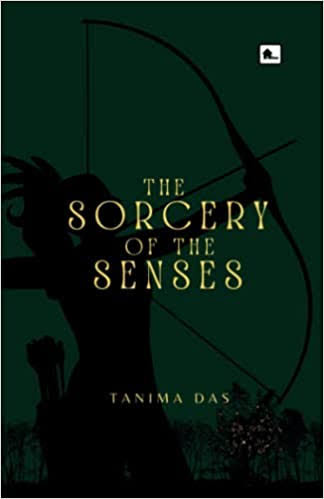
Book Review: The Sorcery Of The Senses By Tanima Das


A divorced man stumbles on a family heirloom when he visits his deceased parents' house. It opens a portal through which he is able to converse with the five senses. They make him see his previous lives, where he, as the chosen one, spectacularly failed in spite of possessing amazing powers. In this life, he is an overall failure and doesn't have any superpowers. The Senses believe that this may help him take on the evil versions of the five senses, who are out to make the universe a hell.

After re-reading the above synopsis, I realised that if this novel was written as a comedy, reading it would have been great fun. But this is not a comedy, and I didn't have much fun reading it. The Sorcery Of The Senses is the debut novel of Tanima Das. It is a fantasy novel that checks every box on the fantasy story checklist. The plot has magical elements and characters with special powers doing interesting feats. The world-building in the novel is not bad. There are three distinct worlds described in the story, and the writing is immersive enough to transport you there. Characterization is excellent, with all the major characters getting a good story arc and making the reader empathise with them even when they end up doing foolish deeds, which is almost every time.

Every fantasy needs an intricate quest for the protagonist to undergo and a formidable nemesis who severely impairs his progress. The novel lacks on these two accounts. This is the first part of a series of books. Though there is definitely a quest, it just begins at the end of this book. Also, we never get a good look at the antagonists, though they are mentioned briefly. These turn out to be the handicaps of the book, and owing to them, the book ends without a hook—something that can compel the reader to grab its sequel when it is released.

The protagonist, Dhruv, doesn't feature much, as most of the story told in this book deals with his two previous lives. But the character, with all his flaws, manages to make an impact. I really loved the realistic way in which his marital issues are depicted. His ex-wife also turns out to be a very sympathetic character, though I guess the author may surprise me in the sequel. The three senses that make their appearances in this volume unfortunately turn out to be damb squibs. Their relevance in the plot is reduced to providing exposition. The characters of the two past lives of the hero are far more interesting, especially the story of the blind princess. The first one had an issue with everyone making really bad decisions, but still, the characters were colourful and interesting.

There are no gimmicks employed in the narration, as the author decided to plainly report the story. But the simple narration turned out to be impactful, especially when magical elements were described. Ghriz moving into the poison forest and Mong curing the illness of the king are two very interesting segments that benefitted most from the plain-sailing narration.

The Sorcery Of The Senses by Tanima Das is the first part of a fantasy series that doesn't make the reader crave its sequel. It is well narrated and inhabited by good characters, though it lacks a hook for the reader in its climax. I do feel that the author missed the chance to make something crazy with material that had the potential for an over-the-top plot. Still, it is a pretty good debut, and fantasy lovers will not complain after reading it.

Friday, May 12, 2023

Book Review: Mr Stoker And The Vampires Of Lyceum by Mathew Gibson

A woman is attacked at the renowned Lyceum Theatre while legendary actor Henry Irving and his leading lady Ellen Terry rehearse for their masterpiece play. When more suspected vampire activities follow, the theatre's acting manager and upcoming author Bram Stoker have to step in. Stoker strives to connect the dots in a gothic London, while in the background, the Whitechapel murderer preys on unsuspecting women and secret societies thrive by attracting youngsters using dark and disturbing rituals. He senses that Irving, his boss and the owner of Lyceum, is somehow connected to these incidents when an undead Prussian baron makes his entry to exact revenge.

There are many books and movies (factual and fictional) that deal with the subject of how a famous author or an artist created a masterpiece. My own favourite is the movie Final Portrait, directed by Stanley Tucci, about how Alberto Giacometti made the painting The Portrait of James Lord (I have written about it). Mr. Stoker and the Vampires of Lyceum is a fictional account of some incidents in Bram Stoker's life that ended up with him writing his tour de force, Dracula. Matthew Gibson is a scholar of Bram Stoker, Gothic, and vampirism. He has written many books on Dracula, and this is his first work of fiction.

Most of the characters in this book are real and renowned personalities who have excelled in their domains. The author has created a fictional version of them and has tried to compose a chilling gothic horror novel. All those characters are successful in creating an impact on the reader because the author, with his extensive knowledge of the historical personalities and their living situations, portrays deeply nuanced sketches of them in the novel. Unfortunately, the same cannot be said about the characters who are not part of history. The character arcs of such characters made me deeply dissatisfied, all the more because they are the major antagonists, and this deficiency seriously impairs the emotional quotient of the plot.

The best character portrayal in the novel is undoubtedly that of Bram Stoker. The author has poured out all his admiration for Stoker and has produced a very likeable and complex person who is forced to keep up his appearances for the sake of the theatre in spite of his poor economic situation. His wife would like him to ditch theatre and pursue the career of a barrister, causing deep rifts in their relationship. His relationships with his boss, Irving, and his subordinates make the novel more interesting and colourful.

Along with his splendid portrayal of historical personalities, the author sketches great scenes of historic places too. He renders a moody and dark London suffering from political unrest, religious excesses, and scenes of disturbing violence. Also, we can see the detailed illustration of the barren and seemingly evil landscape of Danzig. The atmosphere of constant threats and tension adds to the enjoyment of reading this book.

As these are supposed to be the experiences that inspired Stoker to eventually pen Dracula, it is to be expected that the story mirrors the classic to some extent. There are instances where this association burdens the plot to a small extent. Though some interesting plot twists eventually save the book, sometimes I feel like closing it down and taking up Dracula to read further. But for the most part, Mr. Stoker and the Vampires of Lyceum is an interesting book, thanks to brilliant characterization, great atmosphere building, and some inventive plot twists.

Thanks to Netgalley and the publisher for providing this book in exchange for sincere feedback.

Wednesday, May 10, 2023

Book Review: Storythinking by Angus Fletcher


The human brain is often equated with a supercomputer. The common understanding is that it is a logical analytical device that interprets data and provides conclusions based on that. But according to Angus Fletcher, our brains are far more than that. In this short volume, he elaborates on the capacity of our brain to storythink—the capacity for narrative building—which is the basis for human innovation and growth.

Angus Fletcher is a professor of story science and an expert in narrative theory. He uses narrative theory and the technologies of neuroscience to probe the human brains of authors and audiences, finding out the effects of stories on their brains. His conclusion is that stories are not just means of communication, as most of us believe. They are powerful tools for creative action, something that logic-based critical thinking is impossible to achieve. Human brains are able to think narratively as well as logically, and each kind of thinking has a different function from the other. While logical thinking was good for answering how, story thinking made it possible to answer why and what if, which resulted in better planning, adaptability, and innovation.

Philosophers, starting with Aristotle, placed logic as the basis of intellect and degraded narratives and stories as lies. Their quest was for eternal truth, so it was natural for them to find narratives, due to their fleeting nature, not worthy of serious consideration. Angus Fletcher wants this book to do what Aristotle did for logical thinking: explain storythinking and devise methods to practise and perfect the habit of using it. He isn't denying the benefits of logical thought and metaphysics, but he advocates incorporating narrative thinking into the process as well. He also convincingly puts forward the argument that AI can never compete with the human brain on radical innovation because AI, however complex the algorithms it may use, still employs the basic logical method developed by Aristotle in its workings.


The book is an easy read where the writer develops his thoughts on storythinking by using narrative theory. He differentiates very clearly between the more prominent logical thought and storythinking and demonstrates why one is never a replacement for the other. He bases his thoughts on history, biology, sociology, philosophy, and science to clearly illustrate the benefits of storythinking and how it can tremendously contribute to personal and societal growth. I would like to read more about the neuro-experiments performed by the author and how the brains of authors and audiences react to narration.

"Storythinking is contemplating why and what if. It’s conjecturing from causes to effects. It’s envisioning the consequences of different rules for action. It’s mentally modelling hypotheticals, possibles, counterfactuals, and other kinds of things that could happen. It’s using our cerebral machinery to stick original characters into never-before-seen story worlds and speculate on what happens next. It’s natural selection, imaginatively accelerated."


This book was provided by Netgalley and the publisher in exchange for an honest review.

Wednesday, May 3, 2023

Book Review: My Journeys In Economic Theory by Edmund Phelps


I am never that keen to read about economics. I've read certain popular books on the subject, succumbing to their popularity and my FOMO, but generally, when I pick a book, it will never be about economics. I have read a book written by Nobel-winning economist Amartya Sen, but that wasn't on economics. So, when I received the book My Journeys in Economic Theory by Edmund Phelps, who received the Nobel Prize for Economics in 2006, from Netgalley and the publisher in exchange for an honest review, I was travelling into uncharted seas. 

My Journeys In Economic theory, as the name indicates, is an account by the renowned economist Edmund Phelps that focus on the highpoints (and a few low ones too) of his illustrious career. Though the book starts with the chronicling of his childhood experiences and schooling in Illinois and New York, it is majorly about his contributions to economic theory. The author also recounts his interactions with other fellow economists who have associated with him at various times. There are also many mentions about his love towards music and art, which I believe, became crucial in his reshaping of economic theory by introducing aspects like innovation and dynamism. 

Though he was interested in philosophy, his father suggested him to pursue economics, which he did and found that he really loved the subject. He perceived a gap between macro and micro streams of economics which seemed disconnected at the time. One of his initial interest was to bridge this gap. With this in mind he pursued a rigorous and deep study in economic theory. His paper on the Golden Rule of accumulation suggests an optimum level of national saving that can sustain its steady growth of consumption. He wrote a book at the same period that dealt with public debt and how an excess of it would drive a wedge between wealth and capital. It says that public debt, though it increases the wealth of a nation and increases consumption, contracts capital investment. 

Phelps then worked on the relationship between employment, wage setting and inflation, and introduced several important concepts like the role of expectations and imperfect information in wage setting. He was merging the macroeconomics of inflation and employment to the microeconomic decisions of wage setting and hiring. He also wrote a textbook called Political Economy. Phelps went on to work on how altruism, welfare systems and social justice effects economic performance. He argued that this factor also benefits an economy by making it more efficient. His studies on structural slumps was important in understanding why an economy fails to generate investment and employment due to structural issues like ineffective bureaucracy or lack of research and development which cannot be tackled by introducing fiscal stimulus or by monetary easing. He was awarded Nobel in 2006 for his innovative contributions to the analysis of intertemporal tradeoffs in macroeconomic policy, and for his research on the relationship between employment, inflation, and economic growth.


Till then, Phelps felt that all his work was constructed on foundations built by other economists. His desire to work on an economic theory that may open a new frontier resulted in his research on the effects of innovation on economy. He suggested that structural dynamism of a country triggers innovation and thereby benefitting its economic growth tremendously. Phelps has also studied the factors that influence the level of innovation and entrepreneurship in an economy.

My Journeys In Economic Theory is a very interesting book that is short but packed with information. It offers a very concise view into an illustrious career that offered paradigm shifting observations on every area it dealt on. I feel that someone who has a working knowledge on economy will be benefitted hugely by reading this book. For me, who is just a layman as far as economic theories are concerned, it was a bit tough even though rewarding book. I had to refer many other sources to make many points palatable for me and still I will accept that I haven't comprehended it fully. But I am definitely more wiser on economic theories and more inspired after reading about the life of Edmund Phelps. 


Saturday, April 22, 2023

Book Review: Where Are You Going, You Monkeys? By Ki Rajanarayanan

Folk tales are codes of human history transferred to us from the past. Tales that are invented, told, and retold numerous times by numerous generations come with valuable information embedded within them. Folk tales attain a life of their own by collecting sediments from different parts of the world and from different generations of people. Decoding them and extracting these sediments is an almost impossible, though immensely rewarding, task.

I am more interested in just enjoying them, and wondering who else have relished these tales in the long past. I love to imagine that when I hear or read a folk tale, I become one with all its previous listeners, essentially nullifying the space and time separating us. So, when Blaft Publications offered a collection of Tamil folk tales translated in English, in return of an honest review, I was more than delighted. 


I really believe that a folk tale is more alive when someone narrates it. The expressions of the story teller, her tone, pitch and pauses, the reactions of listeners, their laughs, gasps and exclamations, everything makes it more and more alive. When a folk tale is written on paper and recorded, it suddenly become imprisoned, and stop being an organic entity that metamorphoses everytime it is delivered depending on the person who tells it and the period and place in which it is told. 

But the bad news is that, the oral transmission of folk tales is a dying art, as more visually appealing media are replacing old story tellers. Comics, series and movies have created new age folk tales with new age sensibilities that the present generation can identify. World over, ancient folk tales are slowly getting forgotten and along with them, a reservoir of ancient knowledge are breathing the last breaths. So it is the necessity of the times to record and prevent the mass extinction. 

I have read several collections of folk tales, written with the noble intention of preservation. But as written in most of their foreword sections, they have been edited out to satisfy the modern reader's sensibilities. Many stories are edited with the intention of ironing out the parts that are politically incorrect for containing racism, body shaming or sexism. But I believe that this exercise hampers the intention of preservation and stops representing the times when they were told and retold. 

Where Are You Going You Monkeys, the collection of Tamil folk tales by Ki Rajanarayanan, thankfully is one that tries really hard to reduce the distance between oral and written formats of story telling. There is no interference from the collector's or translator's side, except certain footnotes that illuminate certain aspects of the stories that may be alien for today's readers. Author doesn't shy away from stories that portray the primeval value system of the narrators and that makes reading this collection a raw experience. The innocent sensibility of villagers- their prejudices, superstitions, social and economic behavioural patterns and above all their sharp humor, oozes out of the stories. 


Ki Rajanarayanan known also as Ki. Ra is a Tamil folklorist and Sahitya Academy Award recipient. He spent decades collecting folk tales and as per his introduction of the book, he took care to collect them directly from old persons who told these stories after hearing it orally from their ancestors. The folk tales that he collected were published in a Tamil book of around 900 pages. This English translation is an excerpt of that master volume written in Tamil. Translations are bound to miss many crucial linguistic and cultural elements. While translating a book of orally transmitted stories, told in colloquial language, it is difficult to do cent percent justice. But to the credit of the translator Pritham K Chakravarthy, it doesn't feel like the book has lost anything significant in translation. 

The stories are divided into seven sections based on their themes. There are sections dedicated to stories on animals, Gods, Kings, ghosts, married couples, friends and family. In the end there is a section for dirty stories, which is rare in a folk tale collection. Old classic collections like Chaucer'sThe Canterbury Tales, Boccaccio's The Decameron, The Arabian Nights and Madanakamarajan Tales contains tales with sex as the background. Probably because until very recently, folk tales were told for a general audience. But the tales of magic, prince and princess are now totally relegated to kids. That is how there emerged totally sanitised kids friendly versions of fairy tales by Disney and other productions. Collectors usually censor dirty stories or plainly ignore them. The result is the fall of a wealth of such stories into oblivion. 


The stories are narrated in a way that instruct the reader how to retell it to an audience. It is obvious that the writer had a passionate intention to keep the tradition of telling stories alive. Most striking in these stories is their irreverent attitude to the hierarchial structure of the society. We read stories that lampoon kings, queens, priests and even deities. Many stories deal with serious issues like adultery, poverty, greed and treachery. The value systems that are portrayed in many stories are very plastic and doesn't mirror the moralistic beliefs of larger society. This portrayal of staunch defiance that are conveyed by these stories commonly told by lowest denomination of society makes these folk tales engrossing to read. 

Today we have standup comedians who are excellent and entertaining story tellers. But the collective generational wisdom that equips a teller of folk tales is missing in them. Many of the stories may contain elements that are totally alien to a modern individual. But if we go a little deep, we can unfurl a treasure chest of practical understanding that is still relevant to live an enriched life. 

Friday, January 27, 2017

Book Review: A Mother Dies

One of the most difficult experience one has to sail through in life is to face the fact that someone very dear, someone whom one took for granted, is no more. A Mother Dies, a short book of just around 50 pages written by Arusha Topazzini deals with such an issue in her life when her mother passed away. It is very personal and heartfelt account about her mother and their relationship.

At the same time, it is also a universal theme, because in this world there will only be very few lucky people who never had to endure the pain of losing. The writer was able to bring this universality in her writing. It makes you relive the days when you had similar experiences. I feel it has a therapeutic value, when after reading about another person's life, you get a chance to go through your own past, your pain, reevaluate your life and appreciate the value of those who passed by and those who are still with us.

A Mother Dies is available at Amazon Kindle.

Wednesday, December 21, 2016

Book Review: Small Steps to Big Reading

Small Steps to Big Reading is a self help book written by Dr. Hozefa A Bhinderwala and published by Bloomsbury. It is aimed to convert non-readers into readers. These days as an avid reader, I find many complaining to me about various issues due to which they are unable to pursue their reading habit as aggressively as they want to. This short book, I feel, can be a great answer to all of them out there who doesn't find motivation to pick a book, read and actually finish it. It even goes the extra mile and make you inspired to practice that you read in your daily life.

Dr. Hozefa A Bhinderwala is a practicing Psychiatrist and has taken up the cause of reading enhancement of public by organising workshops, classes and making videos from a decade. This book explains the process of reading theoretically. It details how our eye muscles, nerves and brain works in tandem to make sense of what's written on paper and how these informations are committed to memory for future use. The book also gives us practical techniques which can be used to increase our reading speed without compromising on comprehension.

For so short a book, it is great that Small Steps to Big Reading works simultaneously as a theoretical and practical guide and as a motivator to efficient reading. When people ask me how I read fast, my reply used to be that, instead of reading, I do scanning. But after reading this book I came to know that what I thought was scanning is infact reading and all other reading aloud and lip movements that many resort to, are basically child steps. My biggest surprise after reading the book was the knowledge that slow reading, instead of making you understand more, as per the general perception, hamper the quality of reading seriously. After reading the why's and how's, it make sense.

Small Steps to Big Reading is equipped with lot of illustrations that puts across its points more effectively. There are many examples given for every thing covered in it. The language is very simple and devoid of jargon which make the reading even more of a pleasure. The book comes with a Longitude sheet to help us with increasing the reading speed. It is infact something we can easily make ourselves and customise according to the needs. I tried it out and it really works.

Efficient reading is not just for the casual readers. Everybody can benefit from it because in today's world of information explosion, it is a necessity to keep up in order to stay in the game. Be it students, executives, business men or professionals, it is worthwhile and essential to explore the world of written words. This book can be a guide and motivator in that endeavour.

*This book was sent to me by the author for an objective review.


Wednesday, November 30, 2016

Book Review: Tale O'12 by Biranchi N Acharya


In our daily life we encounter countless people and incidents. We receive advices and lessons from varied sources. Things happen to us or someone near to us, from which we learn how to tackle a situation more effectively in the future. Many instances happen in which our whole paradigm about the world and it's workings shift dramatically. But how many of us stop by and appreciate them and the impact they have on our life? How many of us show the courtesy to acknowledge them and how many of us transfer these lessons that are learned in the hard way to others, so that they benefit from it?

These are the reasons why after reading it, I appreciated the effort of Biranchi Acharya for his effort to pen and publish a book like Tale O'12. This book is jointly published by blogadda.com and BecomeShakespeare.com as part of their Blogger to Author program. It is a collection of twelve fictionalised re-tellings of incidents from author's life. They deal with a variety of subjects, like economy, psychology, spirituality, politics and civics. Many of the stories are basically conversations that happened between friends, acquaintances or even total strangers about a particular aspect of an everyday issue that relates to every common man.

The tone of the stories are benevolent and kind, without taking an aggressive or emotional stand anywhere, though the issues they raise have every reason to be so. For example, in the story Religion vs Dharma, an old man convinces a young sadhu that Hinduism is not an organised religion, but a Dharma which in-fact hold together a collection of different religions, beliefs and ways of living. After reading the story, you may either agree or not agree with this point of view. But the tone of the story and the method in which the arguments are organised, motivate you to re-evaluate your personal ideas about Dharma and religion. This I feel itself is a great advancement in a country that takes up issues like religion, politics and spirituality too much emotionally to have an argument devoid of biases.

Most of the other stories follow a similar pattern, but asks questions and try to decipher different issues. My favourite is the one titled The Art of Being Happy. In that author, on a particularly stressful and eventful day, is on his end of his wits. He encounters someone who shares with him the secret to be happy even when misfortune strikes. The idea may sound too superficial and impractical but when we consider that it is our response to an incident that defines our happiness, it makes perfect sense. I would definitely recommend this book for its practical approach to everyday issues that can be helpful to all. The language is very simple and ordinary and easy for anybody- of any age or education, to comprehend.

Now, the only complaint that I have, which I have raised in many other reviews of Indian books, is about something that hampers the enjoyment of even the most well written books with greatest of intentions- lack of proper proof reading. The book has many spelling mistakes, grammatical errors, punctuation errors and I have even spotted a few mistakes in capitalising. Believe me, these things may sound like silly cribbing but for a serious reader even these grossly undermine the reading experience. This has to be taken care by publishers because the writer has used his imagination and intellect and made up this great book of 200 plus pages out of his toil, a few errors are bound to happen. A professional editor and proof reader has to polish this diamond before releasing for public consumption. These mistakes are great disservice to the efforts of the author and I believe the publishers have a responsibility to ensure such errors are corrected.
This review is a part of the biggest Book Review Program for Indian Bloggers. Participate now to get free books!


Wednesday, November 23, 2016

Book Review: The Blaft Book of Mizo Myths


Mythology of a region is essentially the collective memory of generations of people who inhabited the place. A myth is like a species of organism that evolves, adapts, spreads and perpetuates itself through oral re-tellings. With each retelling, a myth absorbs something from the person who tells it and those who hear it. I believe introduction of verbal languages has seriously caused a threat to the evolution of myths. By writing down a myth, its organic nature is threatened. It attains a state of permanency which totally stops its growth.


Having stated that, today it has reached a stage where the recording of myths and study of mythology has become important. Otherwise these amazing amalgamation of cultural snippets from past will cease to exist. In Malayalam this attempt had begun a century back when Kottarathil Shankunni recorded the mythology of Kerala in an exhaustive volume called Aithihyamala. Today every region in India have become aware of the cultural value of mythology and are taking serious steps to collect and do research on them.

That was the reason I was thrilled to receive a book from Blaft Publications about mythology of Mizoram. The book titled The Blaft Book of Mizo Myths is written by Cherrie Lalnunziri Chhangte who is a scholar doing research in comparative study of Native American and Mizo literature. To be frank, I was disappointed by the length of the book, I expected more. (It is 50+ pages book). But after fully reading it, I believe it was a sensible decision.

The book introduces you to a very different world and I would say the stories are unlike any myths that I, possessing whatever limited exposure of Indian mythology, have come across. What make Mizo myths and fairy tales distinct from others is that, they have a childish inquisitiveness, an intent to probe the unknown and come up with simple answers to every puzzle that they meet in their lives. Another factor that I noticed is that the content of these stories are pretty mature. For the kids of today who are overprotected from the contact with nature and outside life, these stories of unrestricted congruence with the amazing world out there, may be hard to adapt. But once they adapt, I believe it has the potential to be a treasure trove with life altering possibilities.

The book contains six stories, and each of them take you to a different surreal atmosphere. There are stories of lovers, warriors, otherworldly creatures like weretigers and Mura, a huge predatory bird (I was envisioning a pterodactyl while reading about it), supernatural demons like Lasi and much more. I loved The Story of the Beginning of the World which is a rich introduction of Mizo mythology. I feel moving this story to the beginning would be more beneficial to the readers. But I loved the way the book ended- with a sad and brutal story of unrequited love that brings the reader back to the mundane world which he inhabits.

I hope Blaft continues publishing such collections of beautiful mythology from other parts of the world and the author Cherrie Lalnunziri Chhangte comes up with a more elaborate volume of Mizo Myths.


Friday, May 29, 2015

In A Cat's Eye by Kevin Bergeron

Willy finds Nancy, the girl he fancies, dead in her room in Hotel Morpheum one day. He too stays in the same hotel. Willy is a misfit- jobless, an ex-convict, totally lacking in social skills, living in his own world and highly volatile. He never pays his rent, but the landlady keeps him there as he is good with tools and comes handy. Police and other lodgers believe Nancy had overdosed on cocaine, but Willy is dead sure she was murdered. He knows that because her favorite statue is missing from her room. 

Willy also knows that Mr. Winkley- her one-eyed cat is the sole witness of the crime. He takes in the cat and embarks on a journey to find the killer; knowing that finding the missing statue is the key to it. The line of suspects is long and in the end of it stands Willy himself- he has the tendency to forget things that he did. He has a vision of the killer in the cat’s eye, but how will he reach to that person? And who is going to believe him?

In a Cat’s Eye is the debut novel of Kevin Bergeron, published by Authonomy, an online community for budding writers, developed by HarperCollins. It is a short novel, slightly longer than a novella. The story is narrated in first person, through the eyes of Willy. It is essentially a detective novel, though the detective in this story lacks most of the basic qualities assigned to one conventionally in the genre. 

Willy is an unreliable narrator and it is this quality that makes the novel distinguished. There is an ambiguity that surrounds his rants, which should alienate the reader after a point of time. But here it doesn’t happen. I was drawn into the story and started rooting for him in a very subtle way as it progressed.  All the other characters in the hotel are nutcases and equally unsociable. All of them seem possible murderers. This motley crew of suspects adds uncertainty and vibrancy to the plot. Only the all-knowing one-eyed cat is the sane being.  

One more aspect that I liked about the plot is the kind of unveiling effect that it has on the reader. The background of the story is provided in bits and pieces and as the narration progresses, the picture becomes clearer and clearer. It adds to the suspense.  The weak point of the novel, for me, was the lack of flesh in it- non-existence of detailing. I love descriptive novels. But considering the protagonist’s condition, it has to be excused.  To sum it up, In a Cat’s Eye is an engaging novel, that never overstay its welcome.

Buy the book :

Wednesday, May 13, 2015

Book Review: Clandestine by J Robert Janes

When I received an invitation to read and comment on the historical mystery novel Clandestine, to be released on 21st July 2015, written by J. Robert Janes, I was not expecting anything special. But this one, a story set in German occupied France during Second World War, turned out to be a surprise package. You believe that you have read every variety of detective stories possible and then something like Clandestine comes along! It is the sixteenth book in the St-Cyr and Kohler series and I am now very eager to catch up on all that I have missed.

The premise of the book is what bowled me over. Louis St-Cyr, a French Inspector and Herman Kohler of Gestapo pairs up to solve ordinary murders happening in France, a country occupied by Germany during Second World War. In Clandestine, their mission is to investigate the killing of two bank employees, who travelled in a bank van near a ruined monastery. They find huge stock of black market goods in the van along with stacks of cash, of which only a small amount is missing. Finding of a pair of expensive high-heels in the van changes the course of investigation into something far more lethal and complicated. With their own and their loved ones’ lives threatened and their own side turning against them, the detectives has to face the biggest dilemma of their lives.

Clandestine made me experience the degeneration of humanity infested by war- its fight for survival, for resources, for existence when faced with unlimited violence, greed and immorality. The two detectives have everything to lose, but they decide to do their job according to what their conscience tells them and not confirming or compromising to the obscene wishes of those who are more powerful. They fight every possible temptation on their way of solving the case and that factor elevates this novel to an altogether different level from other stories of detection that I have read.

Reading Clandestine has made me research a bit on the historical and geographical aspects of the story. It was not just plain curiosity that made me do it, but a desire to appreciate the novel fully. The book is a slow read. There are many sentences and passages written entirely in German and French without any translation. Remembering the names of characters and places was a task for me. The narration is not very descriptive, which made me read many chapters repeatedly. The language of the book is more like a translation, that too a not very good one, from some foreign language. It put me off a bit, but helped tremendously in building the atmosphere once I got accustomed to it. In short, I took my time in reading Clandestine, but by the end every second was worth the effort.    

 Buy the book:

Thursday, April 23, 2015

Book Review: Autobiography of a Mad Nation by Sreeram Karri

I was born in a mentally retarded country.

Sreeram Karri's explosive novel, Autobiography of a Mad Nation starts with this sentence. It gives the feel that this is going to be another long rant about all that is wrong with contemporary India. And it is, in a way. But on careful reading of the book we find that, what shines beneath is pure love for the nation. The novel, published by Fingerprint is longlisted for MAN Asian Literary Prize.

The novel starts with a rant by a young aspiring writer, Vikrant in death gallows awaiting President's mercy. Retired CBI chief Vidyasagar sets forth to find the truth by doing an unofficial investigation after a request from the President. He discovers that it is not a one off incident and there is more than what meets the eye to be discovered. A group of influential men are running manipulations behind the screens an trying to alter the course of Indian history. Is it for good or for bad?

Autobiography of a mad nation is a murder mystery in the outset. At the same time it serves as a look back into the bizarre and insane past of our nation. On one side a fast paced story unfolds parallel to the important historical incidents fom Indira Gandhi's emergency to Gujarat riots, while on the other we are served with some honest social an political observations that need not be on the politically correct realm.

The novel has a nonlinear narrative structure which unfolds in two paths- one is a first person narration of the fictional novel written by Vikrant and second is the actual story of the murders, coverup and investigation told mostly in flashbacks. The narration is stylish and intense. There is no doubt that Sriram Karri is a gifted storyteller wih enough honest passion to make the reader careful for his story and even gives it a serious thought while enjoying it.

The author should be appreciated for his guts to criticise the harmful elements of society without any political or religious bias. Many of the readers will surely be offended by the courage of Karri to call a spade, a spade. One complaint that I have to make is about the solution that the novel hints. I feel it may be ineffective, even extremely dangerous in long run. Yet I enjoyed reading this well crafted, powerful novel about contemporary India and would recommend it to anyone who feels at any point o time that they're living in an insane nation.

Book source: Publisher

Saturday, April 18, 2015

Book Review: Warrior by Olivier Lafont

Books based on Indian mythology is a rage these days. One recent entry into that long line is the mythological fantasy novel Warrior written by Olivier Lafont and published by Penguin Books. Olivier Lafont is a French actor and writer residing in Mumbai. He has acted in many movies and ads. If you want me to pinpoint, he's Kareena's fiancée in 3 Idiots. To be sincere, that was one of the reasons why I agreed to review Warrior, another reason was Penguin being the publisher of it. Some of the best books that I read from my childhood were Penguin paperbacks. Let's see how Warrior stood up to my expectations.

Saam is the son of Destroyer, God Shiva. He is an immortal demigod, living in disguise as a watchmender on Marine Drive, with his mortal mate Maya. One fine day Apocalypse strikes when a faceless enemy triggers a chain of events. Probably Saam is the only one who can avert the end of the world, but for that he has to race against time and find the clues from the long lost Kaal Veda. Joining him are six other companions, some of whom he can barely trust, like his half brother Ara, the spider.

Lafont's hero Saam is the typical brooding, soul-searching, wounded-by-the-past kind of super hero of our time. The other motley characters of the novel also follows existing super-hero/fantasy protocols to the book. But the author succeeds in making them endearing to us by painting them in every extreme shades possible. The varying kind of insanity prevailing in each one of them makes us overlook the familiarity. I especially loved the reckless Ara, with his sarcastic comments and Fazal, the only somber entity in the lot, who strangely become pivotal to the plot many a time.

The plot is epic in scale and covers a lot of geography and history. From Mumbai China to a parallel universe with perpetual fighting machines as inhabitants, from present day to British Raj to the rule of Ming dynasty, the scope of the novel is vast. Writer also touches various subjects on his way- mythology, ethics, time travel, science, romance and politics being only some of them. He succeeds in skillfully interweaving all these into his plot without making the reader feeling bogged down.

I also loved the author putting a sudden break to the relentless initial pace by making all characters assemble in a timeless world. It dragged the narrative a bit, but the insights gathered there helps the reader to appreciate the later developments fully. It also adds a certain depth to the plot. Warrior can be a delight for fantasy-science fiction lovers thanks to the thick, satisfying plotting.

Book Source: Author

Sunday, April 12, 2015

A Biography of Goebbels: Propaganda for Dummies

Every institution- be it a political party, a religious outfit, a charity organization or even a democratically elected government, for its ultimate survival, has to ensure that it promotes itself and its messages reaches the mass, and the mass in-turn behaves in a way suitable for them. For these ends they resort hugely to propaganda- a word that has become much hated for the implication of its manipulative intentions. I have in the last few months developed an interest in observing the modus-operandi of propaganda generation. That was one reason when I got a chance to read the book Goebbels: A Biography, I grabbed it eagerly. 

The rise and fall of Germany during the Second World War is one instant in history were the worrisome effect of propaganda in swaying public opinion is demonstrated. The whole nation stood behind its Fuhrer and his atrocities, due to the massive propaganda propagated by a separate ministry and its chief Joseph Goebbels. The historical influence of Goebbels is so deep that even an adjective, Goebbelsian is coined to denote any mass manipulation propaganda aimed to deceive people. 

Goebbels was born in a normal German family, with a club foot and associated psychological complexes. He had intense literary ambitions. From an insecure young man, Goebbels grew into a self-congratulating narcissist, who was clamoring for approval from others. His defining moment came with his meeting with Adolf Hitler. For him Hitler became the ultimate authority to be loyal to, like a messiah. (The height of this loyalty can be seen when after Hitler’s suicide, Goebbels kill his children and along with his wife, commit suicide.) Due to his extraordinary oratory skills, Goebbels raises through the ranks to become the propaganda minister of Third Reich, enduring severe infighting with his colleagues. His manipulation of the herd mentality of ordinary people is one reason why the German public failed to condemn the atrocities against Jews and other human right violations that were rampant under Hitler’s rule.

Peter Longerich, the author of this biography has taken the diaries of Goebbels as his source material. He has succeeded in making several profound insights into the psyche of Goebbels. The book is very detailed, spanning just short of thousand pages and needs a patient reading. It is a tough nut for a casual reader to crack. For me, several parts were tiresome to read by, especially those about his romantic relationships. But the details on his efforts in spreading the Nazi propaganda were worth the effort. It uses a multitude of techniques like selective disbursement, toning down, falsifying, intensifying, and skillful skewing of information and is done through every possible medium available then- newspapers, cinema and radio. It is an immensely helpful tool for public to understand the workings of propaganda machines, the process behind which, I feel has not changed much from that time.       

Book Source: Netgalley
  

Buy the book :