Sunday, March 19, 2023

Two Graphic Novels by Michel Kichka

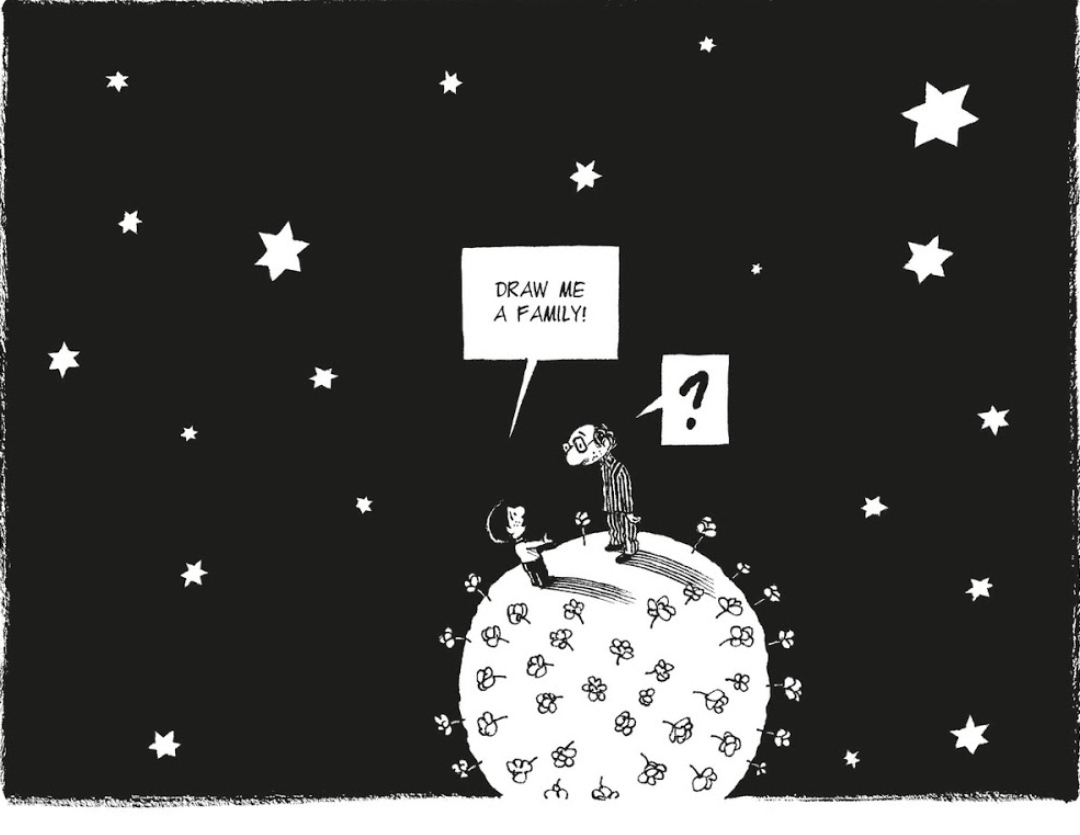
 Michel Kichka is a left leaning Israeli cartoonist. I happened to read two of his autobiographical works that are published as graphic novels- Second Generation and Falafel With Hot Sauce. Second generation is a book about his relationship with his father who is a Holocaust survivor. Falafel With Hot Sauce is about his relationship with Israel to which he immigrated from Belgium. 


Kichka decided to produce Second Generation after reading Maus, another impressive autobiographical graphic novel in which Art Spiegelman wrote about his father, also a survivor. While in Maus, Spiegelman narrates the experiences of his father in the concentration camp, Kichka tries to ruminate on the effects of his father's experience on him and his family. 

Michel's father never talked to him about his past- how his entire family, except him was wiped out and how he survived inhuman atrocities of the Third Reich. Michel figured most of it himself, by reading his father's collection of books, from his caricatures that he drew and his many idiosyncrasies and rants about his sufferings that were tolerated because he was 'in the camps'. I believe all his attempts to identify with his father took him closer to his Jewish identity. 


Henri Kichka, father of Michel Kichka

After immigrating to Israel and starting his own family there, one day Michel wakes up to hear the news of his brother Charly's suicide. After that his father opens up about his experiences and soon becomes a public figure, doing talks and writing books on his experiences. Michel feels his brother was the victim of Second Generation Syndrome and feels his father's behavior has shifted the focus from Charly. From a belated letter from Charly, he infers that unhappy childhood was one reason for his death. Slowly over time he mends his relationship with his father, promising to visit Auschwitz with him. 

It is interesting to note that the book that starts on a dinner table ends in another one. Most of the major happenings in the novel are around dining tables were the mood alternates. But it is assuring to see the last one that emit acceptance and compassion. Second Generation is a very sensible portrayal of a delicate relationship. It never falls into the trap of sentimentality or sensationalism. Drawn fully in black and white, the narration, interspersed with a sprinkling of humor, is very tight and poignant. 

We see a young Michel tasting a helping of Falafel with hot sauce on his first vacation to Israel in the opening pages of his second graphic novel, aptly titled as Falafel With Hot Sauce. At that moment, he learns his first lesson- 'In Israel, what you see isn't always what you get'. The book builds up on this lesson and chronicles his bittersweet relationship with Israel. 

Michel grew up in Belgium according to Jewish tradition. After his visits to Israel and identifying with its struggle to stand up and walk, he decides to drop out of his architecture degree and immigrate. He pursues a degree of art in Jerusalem. In an Israel, which was fastly turning to a far right ideology, he decides to stay a left leaning cartoonists. The first half of the book is details of his integration into the country and second half features his rebellion as a leftist cartoonist. But finally he asserts his love for his country and how his attempts for peace are born out of that love. 


Falafel With Hot Sauce is more dynamic and far reaching in its political scope when compared to the more personal Second Generation. But Michel Kichka keeps the narration very much rooted to the humane aspect of life. Irony of the valuable lesson after his first Falafel is explored in several angles throughout the book- in his social interactions, his personal life and also his political assertions through his cartoons. He chronicles his tryst with the history of Israel in a deeply affectionate, though strictly honest manner. 

Michel Kichka


Thursday, March 16, 2023

Book Review: Dead of Winter by Darcy Coates

Christa hoped that a vacation on the snowy Rocky Mountains with her boyfriend may put the ghosts of her past to rest. When her boyfriend goes missing in a snowstorm, she is forced to take refuge in a remote cabin along with total strangers, waiting for the raging storm to subside and for an elusive rescue mission. But heads start popping and when she realise that one among her cabin mates is a serial murderer, she has to decide whom to trust before the worst happens. 

Dead Of Winter is an upcoming thriller novel by best selling writer Darcey Coates, which I got an opportunity to read, thanks to an advance copy by the publisher through Netgalley in exchange of an honest review. I am reading Coates for the first time. The book is a locked door suspense mystery with cabin in the wood kind of horror elements heavily thrown in. 

Story is narrated in the first person perspective of Christa. The narrative style of Coates puts the reader in the midst of the events. While reading through the eyes of Christa, we are aware of only that which she knows about. At the same time we are part of all the paranoia and anguish that she feels. This made me as a reader, more immersed and invested in her perilous journey. 

Ever prevalent suspense is the biggest asset of the novel. The writer has ensured that there are no dull moments in the plot by keeping it thriving and eventful. Right from the opening chapter, the book pulls the reader into its maze. The terror and paranoia that inhabits every character and the atmosphere of uncertainty and confusion that prevails in every page are sufficient to hook the reader. As bonus there are enough gore and jump scares thrown in to spice up the story. Constant presence of a merciless nature- never ending snowstorm and ice clad mountains that hinders every effort of the characters, disallowing any respite also serves as an antagonist in the tale. 

I have read many suspense thrillers that pull rabbits out of thin air. But the best ones always take care to stud sufficient clues (and of course some misdirections also) in the narrative for the more adventurous reader to pick on their way and attempt to decipher the final reveal. The credibility of a fine suspense writer, according to me, lies in making their reader feel 'why didn't I think of it' instead of 'I didn't see that coming'. Dead of Winter made me regret all the missed clues that I ignored, though to my credit, I was able to crack atleast a crucial one. 

In any locked door thrillers, it is crucial to have interesting characters because most of the thrills happens by the suspicious interaction among these characters. My singular objection with the novel is the lack of riveting characters other than the protagonist. All other characters where mostly one-note kind, and serves only the purpose of carrying the plot forward. More meaningful and complex interactions among them would have added layers to the book and whetted the appetite of serious readers who are interested in something more than a racy ride. 

Dead Of Winter is ideal for a reader who wants to read a relentless, atmospheric suspense thriller that features some gore. It is an easily readable book, with a complex protagonist who shoulders the plot effortlessly and a dense atmosphere saturated with paranoia. The novel will be published on 11th July 2023.


Tuesday, March 14, 2023

Reading About COVID-19 In A City On Fire


Nero played fiddle when Rome burned. And I read a book about Covid 19 when the city I live is burning. Brahmapuram is meant to be a waste processing plant that serves Kochi city, the financial capital of the Indian state of Kerala in which resides around 2.5 million people, many of them migrated from other districts in search of better opportunities. Kochi has a thriving port, it is a bustling entertainment hub with many popular movie stars living there, a transit point, a tourism destination and a huge business center. 

Every big city emits immense amount of waste- plastic, organic and chemical and electronic. It is the duty of the governing body to decide what to do with it, without affecting its citizen's healthy life. Waste management is an important function that decide the livability of a city. We know of several pandemic outbreaks in past when plague and cholera claimed thousands of lives due to pure sanitation. But today, situation is more critical as plastic constitutes a majority of modern waste materials. A well performing government segregate waste and process it- by recycling, incinerating or converting waste to useful byproducts. We have heard stories of Ammonia separated from waste being used in fertilisers. 

Kochi too had a plan for a waste treatment plant at Brahmapuram, a village in the outskirts of the city. In 2008, a plant was inaugurated that became dysfunctional within years of commencement. No attempts were made to make it operational. Brahmapuram remained a waste dumping yard. It initially covered 37 acres and now has expanded to 110 acres. Along with Kochi corporation, several other nearby Municipalities and Panchayats the place for waste dumping. 


An estimated 400 tonnes of waste used to be daily deposited here, out of which around 35% is non- biodegradable. Mayhem broke loose when an uncontrollable fire was set ablaze on March 2nd 2023. After two weeks, today it is officially announced that the fire is put out. Till this time Kochi and many adjoining places was immersed in fumes, which included carcinogenic toxic plastic exhaust. Health experts cautions that bad effects of inhaling the smoke can even transfer through generations. In one word, the fire is catastrophic. 


Now we will discuss the book that I read. It is titled Covid 19: The Greatest Cover-Up in History by Dylon Howard & Dominic Utton. It tries to chronicle the first 6 months of Covid 19 epidemic- from January 2020 to June 2020. More specifically it criticise the response of the governments of China, Italy, UK, US and Brazil in dealing with the pandemic and screwing things up for their citizens, resulting in loss of lives. 


The book predictably starts at Chinese city of Wuhan, the ground zero of the epidemic. The initial detection of a novel SARS virus from the results if two flu patients by Dr Ai Fen and the later cautionary messages by Dr Li to his closed group of friends starts a first wave of frenzy in medical circles. Local government took swift action. Not to contain the disease, but to sweep the rumors under the rug and to quell any more spread by censoring. Details about the virus and its potential to rapidly spread were not initially shared to the outside world and at least 5 million travellers were allowed to move from Wuhan domestically and internationally without screening. This set the stage for a global catastrophe that resulted in loss of precious lives and severe economic setback of several countries and firms. 

Even on the later stage of pandemic, China was busy trying to prove the virus didn't originate locally. The unusually low reporting of confirmed cases and fatalities further accentuated the suspicion on China's game plans. The book goes on to describe how different nations, refusing to learn from the Chinese debacle, continued repeating same mistakes. WHO, an organization formed to promote global health and which was successful in past with smallpox eradication, failed to warn the nations in a timely manner and to establish and enforce a proper unified procedure to deal with Covid. 


Though Italy acted swiftly when they diagnosed their Patient One, supposedly by then Covid had already spread widely. The government tried to maintain normalcy without enforcing lockdowns in southern Italy. Before they decided for a total lockdown, news was leaked and there were mass movement of citizens within the country. This led to even wider spread of the pandemic in Italy. UK believed in acquiring herd immunity for its citizens and decision for a country-wide lockdown came when the issue was already out of hand. Several ill-timed, ambiguous decisions made the public vary of the government approach against Covid. Low stock of PPE, infection among health workers and over-saturation of hospital space further weakened the country. 

In US, the President didn't wanted to create a panic and pull the economy down. Facing an election in 2020, he tried to downplay the danger and caused severe breakdown of hospital systems. Economy inevitably nosedived and eventually US suffered the most casualties due to Covid in the whole world. Brazil, which had the luxury of time to face the crisis also failed spectacularly in taking the virus due to adopting of the same policies that failed in other countries. 

Reading this book at this instant gave me an opportunity to relate the responses of these governments in parallel to the reaction of my local and state governments to the respective crises. In these two weeks of crisis, Chief Minister of the state has not made any comments on the issue. Incidentally he tweeted a congratulatory message to Xi Jinping, who also took care not to appear on public during the initial days of Covid in China. But once the pandemic was within control, he blamed the local government for all shortcomings and punished them. Our CM, instead of assuming responsibility, is quiet on the issue and has made a scape goat of our district collector. She, who was busy with the relief work and who had already in past issued strict orders to Corporation was immediately transferred from the spot. 

The common thread that binds the tragedy of Covid pandemic disaster is its continuous downplaying by the elected leaders by terming it as a common flu. They vehemently denied its effect on the masses and predicted the issue to be over soon. In Brahmapuram too there is an attempt to assure the public that it is just a common fire and there won't be any big effect on the population. A Minister was quick to claim that Air Quality Index of Kochi was still less than Delhi and people from Delhi should come to Kochi to get fresh air. He very conveniently ignores that the fumes in Kochi is carcinogenic and it comes from direct burning of plastic. He never mentions that the emission of these chemicals happened in a short time and in a big scale in Kochi and we are unsure what are the long term health consequences. 

On Covid times, leaders of many countries were reluctant to take immediate steps because of the fear of public panic that may result. But ultimate result was heavy loss of lives. In Kochi, it was suggested during an expert level meeting that the people who may be affected by the fire needed to be evacuated, but Government interfered and decided not to, so that there won't be panic among public and a subsequent ill will against the government. The schools of the district were given off, but public exams were not shifted. The whole city worked as usual, only a warning to use mask while venturing out was issued by the government to the residents and it is not implemented anywhere. 

Several theories about the origin of the Covid virus is floated, but most of them bordered on absurdity. It was confirmed that it originated in Wuhan, but there were conflicting narratives. Either it came from a wet market that sell wild animals or it may have resulted from a leak in the virus laboratory in Wuhan. The writer supported the theory that wet market was the originator. But some recent enquiries suggest otherwise. China is not ready to cooperate with any independent enquiries. 

Origin of the Brahmapuram fire is also mired in controversy. The Government refuses to comment on the reason of a huge contract to process the garbage being allotted to the relative of a leading politician. It also tries to downplay the fact that in spite of acquiring the contract, not a single piece of waste was processed in years leading to a tremendous accumulation. There are rumors that there is a fire outbreak every year at Brahmapuram. Is this year's fire part of an attempt to incinerate some waste, which went out of hand and became a disaster? Or is it an act of sabotage as claimed by the firm that got the contract for waste processing? What about such dumps in other cities of Kerala? Are there any plans to learn from this incident and seriously address the issue of waste management? Will any of these questions get answers? 

It is depressing to realise that in every catastrophies, be it pandemic, earthquake or a man made fire, the public eventually suffers. We elect our representatives with conviction that they are going to do everything that make our life healthier and better. But all citizens are left ultimately are many unanswered questions. 


Monday, March 13, 2023

Era Of Darkness by Shashi Tharoor: A Rear View Mirror

 ' ...in looking to understand the forces that have made us and nearly unmade us, and in hoping to recognize possible future sources of conflict in the new millennium, we have to realize that sometimes the best crystal ball is a rear-view mirror.'


... Shashi Tharoor wrote in his 2017 book, An Era of Darkness, otherwise known as Inglorious Empire: What the British Did to India. The book is in fact an expansion of his viral video of 2015 which made a strong argument that Britain has a responsibility to reparate its colonies. Unlike Germany, where the Nazi atrocities are taught to German children, Britain has adopted a 'sweep-below-the-rug' strategy regarding their colonial misdeeds. As a result, Britons aren't aware of them and the belief that it was the British rule that civilised a bunch of unruly barbarians is prevalent. 

In eight chapters Shashi Tharoor covers almost every aspect of the atrocities perpetuated by the British Raj in India. It tries to answer the question, how is it possible for a country that contributed to 23 percent of world's GDP in 1600, to fail so spectacularly that within three and a half century later, its global GDP contribution was a meagre 7 percent. To prove the hand of colonialism in this failure in one simple sentence, one has to just consider the fact that Britain's per capita gross domestic product increased in real terms by 347 per cent in this period. Tharoor chronicles this progressive systematic exploitation. 


Many Raj apologists- Indians, British and from elsewhere, argues that, India which was a loose collection of princely states was given a collective unity and was ushered into modernity by the British. They claim that the concept of a national identity and democracy was a British gift and along with modern industrialization, education and railways, India was the actual beneficiary of Raj. Though Tharoor doesn't deny the contributions of Raj, he makes a convincing argument that even without British intervention, Indians were capable for achieving these 'gifts' by themselves. He very clearly points out that the primary motivation of the Empire was profit and whatever other positive aspects they left behind were only byproducts of never ending greed. 

In hindsight, Congress party and its leaders had made mistakes that costed the country very dearly, before and after gaining independence. To the credit of Tharoor, he doesn't blindly tow the line of the political party that he belongs to. He is very blunt and factual in assessing these missteps and maintain his credibility as a neutral observer. My only complaint in this regard is that, he fails to mention the role of INA and Bose in the naval mutiny that was instrumental in the British decision to grant independence to India. 


It is to the credit of Tharoor that he doesn't seek to extract revenge on a generation of current Britons for the atrocities committed by their forefathers. He only want British to acknowledge their misdeeds committed to millions of Indians, apologize and agree for a symbolic reparation. In his own words:

'When Willy Brandt was chancellor of Germany, he sank to his knees at the Warsaw Ghetto in 1970 to apologize to Polish Jews for the Holocaust. There were hardly any Jews left in Poland, and Brandt, who as a socialist was persecuted by the Nazis, was completely innocent of the crimes for which he was apologizing. But in doing so—with his historic ‘Kniefall von Warschau’ (Warsaw Genuflection), he was recognizing the moral responsibility of the German people, whom he led as chancellor. That is precisely why I called for atonement rather than financial aid.'

And what should Indians do? Tharoor doesn't speak of it clearly in this book, but I have some thoughts. We need to write proper history of ours. Our own history syllabus is very vague on the behavior of Raj. It whitewashes every one- our colonisers, our previous kings, our oppressive caste system... Our students doesn't know, what we did wrong in the past and so they are ill equipped to look into the 'rear view mirror' that Tharoor mentioned and I quoted in my opening sentence. Instead of rewriting history according to Hindutva, Marxist or Islamic ideologies as suited by the ruling factions, we Indians need an objective history, one that is sincere. Why should someone be offended by truth? It is historic fact that Akbar, Ashoka, Chola kings and Maurya kings had committed deeds that can be termed war crimes in today's perspective. Slaughter, rape and plundering of common people used to be normal. Excessive taxation of newly acquired territory was normal. Religious fanaticism of rulers were normal. But that was so across the world. Then why should we be offended of facing the truth? We need to write history as it happened. If we doesn't respect our history and apologize to everyone who was oppressed by it, what logic it is to believe that a foreign nation would do that..? 

I believe the systematic account of British brutalities and explanation of tangible as well as intangible results of them on Indian society, economy and psychology need to be studied by every Indian, not to extract revenge on the present British generation, but to be aware of the dangers in foreign intervention on our home affairs. Just couple of days back Tharoor's own party MP, who wields unlimited power in his political party, though he doesn't bear any official post, has went to Britain and made a shocking appeal to UK for intervention in India and to save our democracy. It is in the hands of sane and practical minds like Tharoor, that such follies are uprooted before things go out of our hands and we fall under another exploitative 'era of darkness'. 


Thursday, March 9, 2023

Victory City by Salman Rushdie: A Deceptively Complex Tale

A girl who saw flames engulfing everything that she loved, grows up in a monastery and gives birth to a sprawling city, in which she wanted women to have the same position as men. She lives for two hundred and fifty years without aging, and takes important part in the events of that city, that eventually evolved into a mighty empire, leading to its rise and eventual fall. Her gift of longevity turns out to be her curse, when all her desires, her ideals and her ambitions crumble around her. 


When I started reading the latest novel by Salman Rushdie, titled Victory City, I felt it was a simple story by author's standards, sort of a Rushdie version of Ponniyin Selvan. I was disappointed that it lacked the complex layers of Midnight's Children or of The Satanic Verses. But around half way mark, I suspected I was wrong. This one appeared to be a lot more complex than I thought. I had to re-read many chapters to dig out many elements that I missed in my casual first reading. 

The novel is set in 15th century India, and has the background of the rise and fall of Vijayanagara Empire. Many historical personalities make appearances, right from Hukka and Bukka, the two cowherds who found the empire, to Krishna Deva Raya, who turned out to be the last mighty ruler of the dynasty. Rushdie superimpose the story of a fictional undying feminist matriarch named Pampa Kampana who narrates the history of Bisnaga, the name for the empire that is used in the narrative, and uses his touch of magical realism to mirror the current socio-political scenario. 


Salman Rushdie employs the narrative structure of Indian epics like Ramayanam and Mahabharatam in the composition of Victory City. In the above mentioned Indian epics and other works like Katha Saritsagaram or Panchatantram, narration happens at different levels. Similarly in Victory City, the story is told by a modern narrator based on a text recovered from the ruins of the ancient city. Another aspect that he adopted is the narrator who directly affect the narration, like Vyasa and Valmiki who appear at crucial moments and interfere in the events of the story, causing significant impacts on it. 

Like the epics, Victory City is also cyclical in its story telling. The book's opening sentence briefly describe its ending and is a giant spoiler of everything to come. The story starts with the image of a severed head filled with straw travelling across the country and also ends with it. The history of Bisnaga empire, in its two hundred and fifty years of being, witness several cycles of secular liberalism, religious fanaticism, oppression of minorities and women and the celebration of it. Pampa Kampana who is responsible for the birth of the empire and also for starting several cycles of liberalism in the empire, ironically gets trapped and helplessly imprisoned inside this cycle. 

There are several instances in Victory City, where Rushdie liberally lifts situations from epics, fairy tales and history and employs them in his narration, twisting and subverting them in the process. Telepathic capacity of a minister to see a distant war and give a running commentary to the blind king is parodied as the capacity of a blind queen to relay the progress of a war to her scribe. Pink monkeys arrive in a forest for trade with brown and green monkeys ultimately becoming their masters by threats. A queen sleeping for years wakes up after a princess, of her own succession, kiss her. These parodies, when projected through the prism of magical realism transcend the situation from which they are picked and starts emitting new contexts and meaning.


The narrator of Victory City is a nameless person from our times who tries to translate an epic poem that was excavated from the ruins of Vijaya Nagara. This person never reveals their gender, identity or nationality and only thing that we know is an admission of the author not being a scholar but "a spinner of yarns" and that his retelling is meant to entertain everyone. This is very important because the reader has to be aware that what we are reading is not an objective history and neither does author or narrator claim it to be. This story is a modern retelling of historic events seen through the eyes of someone who claims to have lived in it. 

In many places, the narrator or more possibly another editor or a team, has made alterations as evident by footnotes that tries to interpret Pampa's verses and informs of omission of parts that are too fantastic for modern readers. The language of conversations in the story is very contemporary (with recent slangs coming in sometimes) and devoid of formalities and protocols associated with kings and queens which make the reader suspect of what all elements are added in or removed from the original epic to make it palatable.

Using all these techniques, Rushdie spins an epic that doesn't claim to be true (like the fake history that Pampa Kampana whispers into the inhabitants of Bisnaga), that never tries to be great (evident by the admission of the narrators(?)) and has several strands of subjective realities that interfere with the notions of historic accuracy and political correctness. On its first reading, Victory City project itself as a feminist fable that also champions modern concepts of inclusiveness and representation. But Rushdie does a subtle deconstruction of these concepts and project a disfigured caricature of them. I can almost see his wicked wink that lampoons the trend of editing historical markers to make it palatable for the contemporary taste. 

He wants the reader to realise that history is not a linear narration of documented truth. Once history happens, it lives a life of its own through re-tellings, re-writings, exaggeration, multi perspective narrations, dumping down and memory lapses. Pampa Kampana tries to channel history according to her whims and gets defeated spectacularly every time. Though she becomes temporarily victorious by manipulating the thought process of a populace, history chews her out eventually.


Maybe this is what human history was: the brief illusion of happy victories set in a long continuum of bitter, disillusioning defeats.