Showing posts with label politics. Show all posts

Wednesday, June 28, 2023

The Anatomy of Fascism by Robert O. Paxton

 "the war . . . made possible for us the solution of a whole series of problems that could never have been solved in normal times."- Adolf Hitler

"War is to men as maternity is to women."Benito Mussolini


Fascist is a very common word used nowadays to denote anyone whom we don't like. A government head is accused of being a fascist by the opposition, an employer by the disgruntled employee, and a father by the child who feels his individuality is not acknowledged. In the present context, to be termed a fascist, one needs only to do something unpleasant enough for another to perceive that his personal freedom is compromised. It is very common to find any dictatorship rule labelled as fascist. This over-simplification of the moniker only results in the dilution of all the horrors contributed by the movement to the world. It also severely hampers our capacity to identify any recurrence of the phenomenon.

The Anatomy of Fascism is a book by the acclaimed political scientist and historian Robert O. Paxton that tries to redefine the term fascism. Paxton tries to use a holistic interpretation of the subject for this purpose, analysing different fascist movements, both successful and failed ones, and finding out what exactly they did during their lifespan that made them different from other contemporary movements and regimes. Instead of defining fascism at the outset and then elaborating on it, he looks at fascist movements from all angles, in different stages of their development, and finally comes up with a definition in the last chapter. He also steers clear of aligning with any other ideology while defining fascism.

Personally, the book shattered many of my illusions about Fascist Italy and Nazi Germany. I always imagined them to be led from the top down, with the leader micromanaging everything according to his personal whims. I was shocked to know that Hitler had a laid-back and langourous side to him, which wasn't evident from his demeanour in the snippets of speeches available now. Nazi Germany always gave off the air of the ruthless efficiency of a well-oiled system, but the book disposed of that notion of mine. Another of my beliefs about fascist ideology being a properly formulated doctrine went for a toss after reading about the several adjustments and reversals of policy that its leaders made along the path of its evolution. So reading The Anatomy of Fascism was a revelatory experience.

The book studies fascism by breaking down the lifespan of a movement into five parts: germination, taking root, seizure of power, exercise of power, and radicalization. Though several organisations arose in many countries in and out of Europe, a lot of them failed in their initial phases. Only two were successful in reaching the fourth stage of exercising power, and Nazi Germany was the only one that fully radicalised itself before exterminating itself. The book follows different fascist movements through these stages and analyses the changes they undertook in order to survive and climb to the next stage.

The Anatomy of Fascism is a book that gives a very detailed and thorough analysis of fascism and different fascist regimes. The book looks at the interaction of the four elements—the leader, the party, the normative government, and the public—between each other, resulting in their ascend and their sudden decline. It describes how the conservative elements gave legitimacy to fascist movements by forming alliances with them to keep the left at bay and failed to repress these elements when they turned destructive. It describes the ill effects that fascists unleashed on the world and tries to answer if there is a possibility of the horror of fascism being discharged again.

The Anatomy of Fascism reads like an investigative thriller for the history aficionado, providing deep insights into every aspect of fascism. There are enough twists, turns, and surprises by the time Paxton comes up with a definition for the term at the book's end. I will refrain from revealing it here, as I don't want to spoil the book for you.


Sunday, June 18, 2023

Book Review: Pleasure of Thinking by Wang Xiaobo


Suppose that somewhere in history there was a great sage who suddenly discovered all novelties and things interesting, revealing the ultimate truth such that there would be nothing left to be discovered, then I would prefer to be born in a time before such a great sage existed. The reason is that if the ultimate truth has already been discovered, then the only thing left for humanity to do would be to judge everything based on this truth.

 Wang Xiaobo is a Chinese writer whose novels and essays are very popular in mainland China. Some of his novels, like Golden Age, are already translated into English, and now his collection of essays is translated for the first time with the title Pleasure of Thinking. The translation is done by Yan Yan, who also has the translation credit for Wang's novel Golden Age. This upcoming book was provided to me by Netgalley and its publisher in exchange for my honest feedback.

Wang Xiaobo was born into a family of intellectuals. But he was forced to work on a farm in Yunnan as a part of the Cultural Revolution. It is evident from these essays that his experiences in the commune and his later ones as a teacher and factory worker were critical in shaping his unique perspectives on life, literature, and culture. He married the famous sociologist and activist Li Yinhe. Several essays in this collection have sprouted from the sociological works of Li Yinhe about homosexuals, marginalised communities, and villagers in China. He went to the US as a student for a short period and then returned to China. He worked as a lecturer in sociology until his early death in 1997.

This collection contains 33 essays laced with black humour that discuss a variety of themes. It will be easy to discuss these essays if we group them under some headings. Though the contents may spill over in between these categories to a certain extent, it will make sense if we group them as essays on thinking, on sociology, on China, on abroad, and on writing and literature. It seems the pieces are placed in the order of their humour content, with the initial ones being more meditative and sober and the later ones going all out on sarcasm and black humour, the exception being the very last one, The Silent Majority, which is more contemplative.

The first set of essays ruminates about being an intellectual capable of thought. These are mostly connected with his experiences in the commune, where he had to work under army men who were incapable of any thought and simply followed orders. In the essays about sociology, Xiaobo refers to the work of his wife and writes about different marginalised communities within China. He says that even the Chinese of his time were ignorant of the homosexual community in China because they operated as a silent minority. He writes on topics like village communities in China, feminism, leftism in the USA, and cultural relativism. The essays in these two categories are more reflective and matter-of-fact accounts, though we are treated to glimpses of his sharp wit and sarcasm occasionally.

There are a bunch of essays on China that ponder the situations in the country that he observed. Razor-sharp criticism can be found in these pieces, though it is evident that he has deep love and patriotic feelings for his country. He writes about the damages caused to China from the time of Confucius to Mao's Cultural Revolution, which severely impaired the country. The writer writes in his essays about his life experiences in America and Europe. He writes about food, houses, travel, and many other facets of life in foreign nations and compares them with China. These essays are loaded with sharp observation and the recounting of several hilarious incidents.

His essays on literature and writing are some of my favourites in the collection, because here I could feel the balance of penetrating humour and profound thought. He explains the reason he chose to write, about his first novel and his writing style, about different novels with oppression as the theme, and about a book by Italo Calvino about writing. The final essay of the collection and probably the longest one, The Silent Majority, sums up the total world view of Wang Xiaobo and provides a perfect culmination to the book.

As the book is written mostly in the 1990s, the social and political situation of China and the whole world has significantly altered. The issues that Xiaobo addresses in many essays have also undergone transformations, and many of them may seem irrelevant. The pop culture and technological references are outdated. But if we take a dive below surface level, it can be observed that the essays are relevant even now, albeit sometimes in an altered context. For example, in his commentary on the internet, he bemoans the deluge of information and misinformation that it supplies to the consumer, which has escalated today when some of that information is our own.

Reading Xiaobo visualised in me a seahawk that flies far above the ocean, observing it closely and once in a while plunging into it and rising again with a fish on the beak. He gives us a general description of the subject and, when we least expect it, takes the plunge and throws towards us a surprise observation that is consistently profound and witty.

Wednesday, June 7, 2023

Book Review: An Odyssey Of The Mind by Narendra Murty


According to the Odyssey, the epic written by the ancient Greek poet Homer, it was for ten years that Odysseus wandered around on the high seas after the Trojan War to reach his beloved country of Ithaca. The journey took Odysseus to several lands inhabited by different beings, and instead of permanently settling in any of these places, despite temptations, he managed to reach his destination. Narendra Murty has collected 20 of his essays written over ten years in this collection, aptly titled An Odyssey Of The Mind. It is evident that he has, in preparation for writing these essays, studied a wide range of disciplines and subjects and read a vast array of books. I believe it is to his credit that he expanded his knowledge base as wide as the sea between Troy and Ithaca and didn't confine himself to a single island of thought.

The essays in the book An Odyssey Of The Mind cover a wide range of topics: psychology, philosophy, ecology, economy, sociology, politics, and history, and all of them invariably centre on the challenges of living in the present age of AI, automation, cultural turmoil, and rampant consumerism. Murty has stated his aim as being to provide perspective to the confused person who is stuck in the rut of existence. He certainly makes the reader think and re-evaluate his life and that of the world around him, and that itself I feel is a success. Unlike the books that provide some ready-made and quick-fix solutions to living one's life, Murty makes the reader walk the tough path and come to their own solutions and conclusions about the topics that he raises.

The tone of the book is very conversational and makes the reader feel that a concerned friend is having a discussion about life. It changes from advisory to lamenting, from concerned to complaining, from grave and weighty to witty and jovial. We can find some satirical pieces and even a poem in there. This quality—the wide variety of topics and shifting tone—creates an intriguing experience.

Personally, I liked the essays on philosophy and psychology the most among the lot. It is in these essays that Murty comes into his element and puts forth humane arguments for living enriching lives. The one that differentiates knowledge and wisdom, another that ridicules the folly of blindly following quick fix books like The Secret, and yet another that dissects the increasing feeling of emptiness in spite of accumulating material wealth are some examples of the best empathetic writing that I have read.

At the other end of the spectrum are the essays on globalisation, the onset of a technological utopia, and concerns about the unchecked growth posed by humanity. There are many valid issues raised in these essays, and most of them have to be of immediate concern to our policymakers. But I don't believe that situation is as dire as it seems. I would take a far more lenient position as far as science is concerned. It is true that the progress of science is lopsided and lagging, thanks to the interference of our politicians and their misguided priorities. But it still seems to be on the right track, and it is only a matter of time before we reach our destination.

Technology, especially AI, will replace jobs and definitely pose a threat to our workforce. But so has every technological advancement that has happened in the past (though the scale may be higher this time). From agriculture to wheels to steam engines to computers, the function of technology is to disturb the status quo between production and inefficiency. Every upgrade has invariably resulted in the loss of livelihoods. I sincerely believe that collectively we will survive this onslaught too.

I believe right now is the time when human lives are most valued in all of history. Common people were treated worse than cattle throughout human history. But today they are treated at least as cattle. It is not ideal, but nevertheless, it is an improvement over forced slavery and mass killings. I believe humanity is at a crossroads, but we have faced such situations before. We may not choose the best path forward, but I am positive that the path that we choose will be the one that ensures survival.

An Odyssey Of The Mind is a thought-provoking collection of essays that examine some existential crises that modernity is facing. It is a very relevant book that asks all the right questions. The readers need not always agree with the views of the author, but the book's significance is that it forces the readers to think along its lines and draw their own conclusions on certain significant threats that are encircling us.

Monday, May 15, 2023

The BJP just threw a spanner into the Congress gears, and no one is talking about it.


State elections in Karnataka are over, and Congress has registered a comfortable win. But as usual, two of its most important state leaders have already started a power war for the Chief Minister post. A tried-and-tested solution is to share the CM post with the agreement that one person will be CM for some time and the next for the remainder. Siddaramaiah, the senior leader, has agreed to a two-year term out of five for himself if he gets the first chance. This seems to be a very mature solution, and at first glance, it appears that Siddaramaiah is ready for a ceasefire. But D. K. Shivakumar is not agreeing to this very amicable solution. He wants the CM post for himself.

What might be the reason for this stubbornness? The answer lies in the spanner that the BJP threw into the gears of the Karnataka Congress when they suddenly appointed present Karnataka DGP Praveen Sood as the CBI director. Praveen Sood is the policeman who is accused by D K Shivakumar of being a BJP stooge who registers cases only against Congress workers and turns a blind eye when any BJP workers are in trouble. Shivakumar has openly stated that once Congress comes to power, he will make sure that Sood is terminated from service and arrested. When PM Modi selected Sood as CBI director, it may appear that he was just protecting Sood from the ire of the ruling party.


But that's just the tip of the iceberg. The appointment of Sood is a plan to widen the rift within the Congress party and, if possible, arm-twist some of them to jump on the BJP bandwagon. I believe Siddaramaiah already started playing the BJP script unknowingly when he proposed the two-year CM plan. If Siddaramaiah gets to become CM, Shivakumar has every chance to end up on the gallows because there are already CBI cases against him, and Praveen Sood, who already has an axe to grind, will do everything in his power to make sure he is implicated.

It is only logical that Siddaramaiah will be happy to move Shivakumar out of his way and get to be CM for the full term. So Shivakumar realises that unless he gets to be the next CM, he is in trouble. As CM, if you are prosecuted by the CBI, there will definitely be some support from the party and workers. But if there is no power, no one is going to bother about his fate. Even High Command may feel that it is for good that he is out of the picture. One headache less for them. That is why he is fighting tooth and nail to get the CM post.

An option for the BJP if Siddaramaiah gets to become CM is that it can lure Shivakumar with promises to drop CBI cases if he joins them along with some MLAs loyal to him. In that case, the BJP will surely get JDS support too, because JDS is the real loser in this election. They were believed to be kingmakers. But now there is no value for them in Karnataka politics. In that case, with JDS and Shivakumar's support, the BJP may find it possible to eke out a majority and form a government like they did in Maharashtra.

What if Shivakumar gets to become CM? He will be plagued by CBI inquiries instigated by the BJP. Siddaramaiah may do everything to make governance hell for Shivakumar. I don't think Siddaramaiah may jump ship because there is a high chance that he may get the CM post very soon. Interesting developments are unfolding in Karnataka. Let's see how it finally ends up.

Thursday, March 29, 2018

Cambridge Analytica: The Great Indian Fiasco

Cambridge Analytica, the British political consultation firm is in a soup nowadays. It seems they use the personal details of Facebook users in winning elections for their clients. They are facing criminal charges for this in the USA.

When the news came in, Indian political scene also became muddled (as is the norm nowadays). BJP cited an old article which claims INC used the help of Cambridge Analytica in election campaigns. Rahul Gandhi in turn accused BJP of using their services.

A whistle blower claims that INC is one of the major customers of the firm. Now latest news breaks confirm that INC's campaign poster is framed in the office of the ex CEO of Cambridge Analytica. This remembers me of the infamous scene penis enlarger scene in Austin Power movie. (Check YouTube.)

My doubt is very simple. If you're going by the electoral performance of Congress party in recent years, it is evident that Cambridge Analytica is a huge failure as a political consultancy. And their method of collecting Facebook user identities is not working at all. It even seems to have an adverse effect.

BJP probably should be thankful to this firm, which may be one of the reasons they are in power in majority of India. They are supposed to keep quiet and let the drama continue...

Sunday, January 8, 2017

Durbar by Tavleen Singh: Criticism of Dynasties


Years back I had read a book called Political and Incorrect by journalist Tavleen Singh, which was a collection of several of her articles written for various periodicals. I loved her integrity after reading it and started following her articles through her twitter account. Now I got a chance to read another of her book Durbar, which is about the situation of our nation when late Rajiv Gandhi was our PM.

Durbar is a scathing criticism of Rajiv's tenure as Prime Minister and of the dynasty politics. Tavleen Singh establishes how most of his decisions and actions costed India dearly in home-front as well as in international arena. The book starts by explaining the situations during the assassination of Indira Gandhi and the infamous killings of Sikhs that followed. While it was declared that Rajiv was going to be the prime ministerial candidate, even after his justification of the killings, general feel among public and media was that he was capable of changing the course of our nation for good. But it was not to be.

The book is a chronological account. It has the feel of a memoir and not that of a political discourse. This vastly improves the readability of the book. The author had personal connection with Rajiv and Sonia Gandhi and she is able to give a lot of insights into how their relationship worked. Her interactions with different players of the time and their perspectives makes it all the more interesting. I was impressed by her adventures inside the Golden Temple.

Another positive of Durbar is the objective stand that Tavleen takes. She doesn't criticise for the sake of it. I still felt the account just skimmed the surface of the time period and lacked depth especially while dealing with the case of Bofors scam.

BUY THE BOOK:

Wednesday, November 9, 2016

It's All In Black & White

People don't have any idea what's black money. Guys remember last month when you checked out of that hotel, the receptionist asked you if you need tax bill and you said you didn't need bill with a smirk? The Rs 2000 that you paid became black money the moment it was gone from your hand.

Or that Rs 100 you paid for a pirated dvd on roadside yesterday. That became black money and is now on its way to help drug Lords & terrorists break our nation apart.

Or that medicines you bought without tax bill and that electronic shaver which you bought from smuggled goods store. The money that you handed out is black money now.

You bought a piece of land showing paper value 5 lakh and paid 40 lakh. 35 lakh that you paid has now become black money...

That donation you paid without receipt to secure a seat for your kid in that posh school and that 500 that you paid the policeman to escape from his long hands has also became black money.


What happens is that all this amount moves out of the mainstream economy. Then it starts it's journey towards its masters. Because once it moves out of control all transactions that use this money will be nefarious,  illegal ones. Finally it reaches the coffers of hoarders. For hoarding money, obviously you need bigger denominations like 500 and 1000s. Now when these denominations are banned, suddenly all these currency gets worthless. But for all those who have genuinely earned white money, government has given chance to deposit in banks after revealing source. 

But it becomes impossible for black money to get legitimised because it's tough to reveal sources. May be a small portion may escape.

Now government has a clear account of how many 500& 1000 Rs notes is in circulation. It has to just check how much is returned to it. Remaining is a deficit which government can compensate by printing new currency. And this currency can be used for developmental and beneficiary purposes.

So any unaccounted money acquired illegaly gets back to government in a single stroke.


Thursday, April 23, 2015

Book Review: Autobiography of a Mad Nation by Sreeram Karri

I was born in a mentally retarded country.

Sreeram Karri's explosive novel, Autobiography of a Mad Nation starts with this sentence. It gives the feel that this is going to be another long rant about all that is wrong with contemporary India. And it is, in a way. But on careful reading of the book we find that, what shines beneath is pure love for the nation. The novel, published by Fingerprint is longlisted for MAN Asian Literary Prize.

The novel starts with a rant by a young aspiring writer, Vikrant in death gallows awaiting President's mercy. Retired CBI chief Vidyasagar sets forth to find the truth by doing an unofficial investigation after a request from the President. He discovers that it is not a one off incident and there is more than what meets the eye to be discovered. A group of influential men are running manipulations behind the screens an trying to alter the course of Indian history. Is it for good or for bad?

Autobiography of a mad nation is a murder mystery in the outset. At the same time it serves as a look back into the bizarre and insane past of our nation. On one side a fast paced story unfolds parallel to the important historical incidents fom Indira Gandhi's emergency to Gujarat riots, while on the other we are served with some honest social an political observations that need not be on the politically correct realm.

The novel has a nonlinear narrative structure which unfolds in two paths- one is a first person narration of the fictional novel written by Vikrant and second is the actual story of the murders, coverup and investigation told mostly in flashbacks. The narration is stylish and intense. There is no doubt that Sriram Karri is a gifted storyteller wih enough honest passion to make the reader careful for his story and even gives it a serious thought while enjoying it.

The author should be appreciated for his guts to criticise the harmful elements of society without any political or religious bias. Many of the readers will surely be offended by the courage of Karri to call a spade, a spade. One complaint that I have to make is about the solution that the novel hints. I feel it may be ineffective, even extremely dangerous in long run. Yet I enjoyed reading this well crafted, powerful novel about contemporary India and would recommend it to anyone who feels at any point o time that they're living in an insane nation.

Book source: Publisher

Tuesday, April 7, 2015

മാണിസൂത്രം

സീന്‍ ഒന്ന്
രംഗം- മാണിഭവനം

മാണി- മോനേ ജോസേ, അപ്പന്‍ നിനക്ക് കെട്ടാന്‍ ഒരു പെണ്‍കൊച്ചിനേ കണ്ടു വച്ചിട്ടുണ്ട്.

ജോസ്- ദേ അപ്പച്ചാ, ഒരു മാതിരി...

മാണി- ടാ മോനേ, ഇത് അംബാനീടെ മോളാടാ...

ജോസ്- എന്നാ എനിക്ക് ഓക്കെയാ അപ്പച്ചാ..

സീന്‍ രണ്ട്
രംഗം- പ്രധാനമന്ത്രിയുടെ ആപ്പീസ്

മാണി- പി എമ്മേ, എന്‍റെ മോന്‍ ജോസിനെ റിസര്‍വ് ബാങ്ക് ഗവര്‍ണറാക്കണം.

പി എം- ഒന്ന് പോടേ, ഇവിടെ പണി പഠിച്ചവന്മാര് ക്യൂ നില്‍ക്കുമ്പോഴാ...

മാണി- സാറേ, അവന്‍ അംബാനീടെ മരുമോനാ...

പി എം- ഓ.. താനൊരു കാര്യം ചെയ്യ്. കാലത്ത് അവനെ ഇങ്ങ് വിട്. ഓഡര്‍ കൈപ്പറ്റി ഉച്ചക്ക് മുന്നേ ജോലിക്ക് കയറട്ടെ. പിന്നെ രാഹു തുടങ്ങും.

സീന്‍ മൂന്ന്
രംഗം- അംബാനിമന്ദിരം

മാണി- ചേട്ടായീടെ മോളെ എന്‍റെ കൊച്ചന്‍ ജോസിന് ആലോചിച്ചാലോ?

അംബാനി- അറിയാന്‍ മേലാഞ്ഞിട്ട് ചോദിക്കുവാ... താനാരുവാ?

മാണി- ഞാനാരെന്നത് നിക്കട്ടെ, ചെക്കന്‍ റിസര്‍വ് ബാങ്ക് ഗവര്‍ണറാ...

അംബാനി- കല്യാണം രണ്ട് മാസത്തില്‍ നടക്കണം, ശേഷം ഒരു വിദേശകമ്പനി ഏറ്റെടുക്കുന്നതുമായി ഞാന്‍ തിരക്കിലാകും. പിന്നെ അറിഞ്ഞില്ലാ പറഞ്ഞില്ലാന്ന് കുറ്റം പറയരുത്.

സ്റ്റേജില്‍ വെളിച്ചം മങ്ങി വരുന്നു. എല്ലാ കഥാപാത്രങ്ങളും കയറിവന്ന് അരണ്ട വെട്ടത്തില്‍ ആനന്ദനടനം ചെയ്യുന്നു. താളം മുറുകിവരുമ്പോള്‍ കര്‍ട്ടന്‍ വീഴുന്നു. ആ കര്‍ട്ടന്‍ തലയില്‍ വീണ് പൊതുജനം എന്ന കാണിയുടെ ബോധം മറയുമ്പോള്‍ നാടകം സമാപിക്കുന്നു.

കടപ്പാട്- Readers digest മാസികയില്‍ പണ്ട് വായിച്ച ഫലിതം.

Thursday, April 2, 2015

The Comment by Giriraj Singh and The Fair Game

“Agar Rajiv Gandhi koi Nigerian ladies se byaah kiye hote, gori chamra na hota, toh kya Congress party uska netritwa sweekarti kya?"

Union minister Giriraj Singh uttered these lines last day and following his universal condemnation, even from his own party, has expressed regrets. As a responsible leader, he should never have said something like this. Anyone can see through the racist tone of his remarks.

First thing, it is wrong to generalise a women of one nationality and secondly he spoke of them in degrading tone. Third issue is that as Sonia is holding a responsible position from several years now and has proven her mettle, it is ridiculous to opine that her merit is her skin color. So it is indeed a shameful, politically motivated, sexist and racist remark that the minister made.

Being settled on all that, let us just go a bit more deep into his statement. If hypothetically we imagine that Rajeev Gandhi had indeed married an African and if she is as qualified and skilled as Mrs Gandhi is now, would we as a nation had given her the same level of acceptance? Just give it a thought with all your heart, with all your sincerity.

It is a known fact that Indians have an obsession with fair skin. A fair skin is our first identity of beauty, of innocence, of charm. We need our female actors and cultural icons to be fair skinned. In our market are numerous products that promise fairer skin to its customers. On our TV and other media we encounter ridiculous advertisements that praise the benefits of fair skin. And many of us shamelessly buy and use them, fully aware their promises are empty. Engaan biriyani koduthaalo?

After condemning the minister for his irresponsible remarks, it will also be worthwhile to just look into the Pandora's box that he has opened. In it we may find a face mirror and on that mirror we may see a hideous face staring back at us.

Saturday, May 24, 2014

It AAPened again... In Tihar jail.

Normally I never post on political issues in my blog; the one exceptional case was when Arvind Kejriwal became CM of Delhi. In that post, I tried to reason the tremendous performance by a political party that was very young and not with any substantial ideological backing. After some months this is another post on the same person.
Now situation has changed drastically from the time of my last post. AAP quit from governing Delhi in just 49 days and contested in Loksabha elections opposing Modi and his party BJP. They failed miserably and proved that they have lost the goodwill throughout the nation and particularly in Delhi. They tried to get back the abandoned Government in Delhi, but no one backed them. Delhi elections are impending. With their performance in the seats in Delhi in the Loksabha elections, there is minimal hope.
Two days back Kejriwal got arrested. He was send to Tihar jail by the Metropolitan magistrate. AAP cadre has started agitations against arresting their beloved leader who as per their claim is not a criminal. The case was a defamation suit filed by Nitin Gadkari, BJP leader. Kejriwal had made a list of most corrupt politicians in which Gadkari was named and announced it publically. Gadkari claims that he was insulted and went to court.
Court summoned Kejriwal and directed to sign a personal bond of Rs. 10,000, which he refused, reasoning that signing bond is against his party policy and many poor people who are not wealthy enough to sign bond are languishing in jails all over the country. The next alternative of the court was to send him to jail, which it did. This has caused AAP to agitate.
This is the whole background of the happenings. Why Arvind Kejriwal, who has not done any crime, is jailed? For this we have to know a bit about the legality of the issue.
India has a system that ensures its citizens’ freedom of speech. But there may be someone who misuses this freedom by baselessly insulting others. If I feel someone insulted me publically, I can sue them for defamation. When I file a defamation suit, it becomes the responsibility of the person who insulted me to prove either the comment was not insulting or what he commented was based on truth with facts and figures.
The first step the court takes after receiving a criminal suit is to summon the other party (defendant) and fix a date to hear his side of the argument. If the defendant does not come it is forcefully done by arrest. Serious crimes like murder are non - bailable offenses and the defendant has to live in custody till the hearing day and police is responsible to bring them to court. For other crimes that are not that serious, a bond is required to avoid judicial custody.
For many criminal cases a bail bond has to be signed by a reputed citizen who owns taxable property in India. They have to appear with the tax receipt and sign the bond, taking the responsibility of the defendant appearing in court for hearing. If the crime is not serious and the defendant is a person of repute, judge can insist for a personal bond. i.e the defendant agrees that he will appear before the court on the date of hearing. The court will require defendant to sign the bond for an amount, say 5000 or 10,000 which is the surety that he will do so. If he fails to appear on the day, only then this money will be encashed.
Criminal procedure of our country is such that, the defendant can avoid custody by signing a bond if the court approves.  In case of Kejriwal, he proclaimed that Gadkari is corrupt in public. Gadkari filed a defamation suit. Court summoned Kejriwal and he appeared. Next step is judicial custody and court gave an option to opt for a personal bond of 10,000 considering him a man of repute. But Kejriwal decided not to sign the bond. If he does not chose that option, the law of the land states that he has to be in judicial custody till the day of hearing.
Now my doubt is whether Kejriwal is so ignorant of this simple criminal procedure. It seems he is in dire need of some news space as his opponent in Varanasi is holding the limelight for now. Also impending elections in Delhi is also a reason for all this drama.
PS: Another defamation suit was filed by Gadkari on Manesh Tewari of Congress party for some of his remarks in 2010, regarding Adarsh scam. Last month Tewari had to issue an unconditional apology to Gadkari as he was unable to substantially prove any of his allegations. Following the apology Gadkari decided to withdraw his complaint.

Monday, May 5, 2014

Trailer Review: Kya Dilli Kya Lahore

It felt great when I received the email inviting me to participate in the blogger’s contest by Picture Thought Productions. The contest was to review the trailer or song of their new movie Kya Dilli Kya Lahore. I was excited of the invitation for two reasons. One the movie was presented by Gulzar. Now who doesn’t respect the stalwart…! Writer, director, poet, song writer… Gulzar Saab is a master in every sense. Second reason is Vijay Raaz, who is the director and one of the main actors. He is an actor who excels in any kind of movie- be it an art house movie, a parallel one or a commercial cinema. There are very few actors who can juggle effortlessly between comic, tragic and tragicomic roles.

I chose to review the trailer of the movie because I am not well versed with music. Of course I love hearing music, but to describe it or assess it- it is beyond me. One more reason is the use of Punjabi language in the lyrics. I don’t know Punjabi much, and to comment on the lines written by a veteran poet like Gulzar without comprehending the meaning is nothing short of sacrilege. Let us move on to the trailer.

The trailer starts (of course after a hurried mention about the support of Gulzar Saab and the customary display of the logo of Picture Thoughts Productions) with distant sounds of gun fire that suddenly gets ear splittingly near and a glimpse of a soldier with a gun. Appears on the screen a text that mentions the time frame in which the story happens- “Once upon a time in 1947” and slowly 7 changes to 8. This is a good move. The viewer, when he sees the year 1947, connects it to Independence Day and the transformation of the year to 1948 makes him prepared for what is to come. In a split second, he connects the gunshots and image of the soldier to 1948 and knows the movie is about the disturbed time after Partition.

Next we see a Pakistani Captain played by Vishwajeet Pradhan, ordering a trembling, hapless soldier, the only surviving one among his friends (Vijay Raaz) to invade the Indian post and get a secret file. Scene shifts to the Indian post, a battered hut where a tired Indian soldier (Manu Rishi) is explaining to his superior that he is alone there as all others are dead. Then they meet. The scene is hilarious and that was an understatement. Some gun shots follow and then start the verbal assault. The argument starts with jingoism and then moves onto the state after partition. Background score slowly gets sad and argument gets heated. We come to know that the Indian soldier is originally from Lahore. Shots are fired and he gets injured. Gulzar’s melodious poetry fills the atmosphere- about borders, about someone angry creating them and a suggestion to make them boundaries of a field and play kabaddi in it.

We see the Indian soldier holding a big bundle and led by the Pakistani on gun point through a wheat field. Enter the Indian Captain scolding the soldier for betraying the nation. He is suspected of treachery. The Pakistani soldier reveals that he lived in Purani Dilli. This is a very interesting situation. Indian soldier spent his entire life in Lahore and Pakistani in Dilli. Yet they are made to change sides fight against each other. The trailer ends in a sad atmosphere of brotherhood torn by manmade situations and manmade borders with the song Kisse Lambe sung by Sukhvinder Singh.


The trailer gives a feeling that the movie is about the absurdness of neighbors, friends and brothers fighting each other in the name of borders that are drawn to satiate the ego of someone else. The plot looks a bit similar to the Bosnian war movie No Man’s Land, but the setting of Partition era and the presence of talented cast will give this movie an edge in India. 

Thursday, March 6, 2014

Book Review: Prisoner Jailor Prime Minister by Tabrik C

The best political novel that I read is First Among Equals by Jeffrey Archer. It told a story spanning decades about the rise of three competing politicians from diverse backgrounds and of different ideological positions and its masterstroke was the suspense that broke only in its last sentence. The awesomeness of that novel is the reason why I keep that as a benchmark when I read anything in the genre. Tabrik C has attempted a political thriller to start his writing career. As soon as I read the synopsis of this book on BlogAdda, I was interested to know what dimensions can an author who is also a perfumer, an entrepreneur and a political enthusiast, bring to the table.

Prisoner Jailor Prime Minister tells the story of Siddhartha Tagore, a music prodigy and Harvard educated heir of a senior politician who enters the arena of murky politics. The novel starts when a mysterious person enters Indian territory through Pakistan and plants a nuclear bomb in Pokhran on December 31st 2016, the day Siddhartha is elected to the Prime Minister's office. Causing head ache to the newly elected Prime Minister, one side is the Jehadi nuclear threat and on other side is the internal revolt by opposition leader Rukmani Devi, an economist and a Nobel laureate who wants to alter Constitution. Reader is then exposed to his past- a past of hidden secrets, bruised egos, reckless living, his relation with his love Ruby and her twin sister Karisma.

The story is told in alternating first person and third person narrative. First person narration is through the eyes of Siddhartha and wherever he is not present, it is in third person. Also the novel uses a non linear time frame. Novel starts in 2017 and alternates between then and as back as 1986. These techniques, changing narrators and alternating time frame is, I feel becoming a norm in Indian English writing. In the case of this book, they definitely help in getting into the genius but deranged mind of the protagonist, which is essential in identifying with him. It also help to keep the suspense built up. The book cover is designed in line with its mood- dark, sinister and ominous.

Tabrik has succeeded in writing a book that is immensely readable. The characterisation is a high light of this début novel and it is really satisfying to read about a bunch of people who are as crazy as nuts but relatable to the core. The passion that has went into creating them, not only the significant ones like Siddhartha, Ruby or Karisma, but even the relatively minor characters like Vikram and Shanti Jaykar is commendable. I loved the parts were Siddhartha shows off his Mozart Man psyche. His sudden transformation and behavioural pattern are depicted very well. There were a couple of places were the narrative plunged into cheesy, even little bit silly situations, but I feel those can be overlooked.

As a political novel, I expected a bit more politics in it. The ideological differences, power games, confrontation of national issues and conspiracies that are an integral part of the genre are given a toss, preferring to concentrate on more personal affairs. That definitely is an opportunity lost as the present Indian political scene muddled with serious issues of cross border terrorism, corruption, favouritism and regionalism could have provided ample potential for a great thriller.

Prisoner Jailor Prime Minister is a good debut novel inhabited with many complex characters and tells a good story. The author can be proud of it. Hope the next time he writes one which is more insightful about Indian political scene.

This review is a part of the biggest <a href="http://blog.blogadda.com/2011/05/04/indian-bloggers-book-reviews" target="_blank"> Book Review Program </a> for <a href="http://www.blogadda.com" target="_blank">Indian Bloggers.</a> Participate now to get free books!

Sunday, August 18, 2013

Book Review: The Redeemers by Suresh Taneja

One major problem plaguing India is rampant corruption. We find this Frankenstein's monster attacking us more or less in every walk of our social life. The public is so frustrated of this evil that any movement that tries to curb it gets tremendous support. People are ready to back any politician of any ideology if they can guarantee corruption free governance. Still no one is any where near rooting out this evil from our country as the roots are so strong and deep inside our core. Moreover if anyone tries to come out of this vicious circle, dark elements of our society puts so much pressure on them, that they eventually buckle.

Suresh Taneja, through his debut novel The Redeemers, tries to put forward a positive plan to eliminate corruption from society. The Redeemers is the story of four youngsters who are destined to start a movement that takes India to the most prosperous of the world nations. The story is told in flashback, when the kids of G4, the collective name of four people who are responsible for this feat, demands them to tell how they achieved it. Vikram, Yuvika, Akshay and Manisha are four smart youngsters who wants to enjoy their vacation together. But destiny intervenes and a cycle of events make them see and experience some really dirty scenes of corruption in grass root level of society. They are shaken to the core, but decides to do something to change the situation. The story is about how they, with the help of a TV show host, starts a movement that changes the future of a country for good.

The Redeemers is the second book of Taneja. In fact it is a elaborated re-telling of his first novella with certain changes to make it more interesting. Author claims his intention is to catch the attention of youngsters who as per him holds the key to a bright future for the country and the world. The Redeemers is a feel good novel, which can inspire and entertain its target audience. One major incentive to read this novel is the writer's good intention. It put forward the virtue of nobility, the necessity to do the right thing, even when everything around us tries to deviate us from it. It does it without being overtly preachy, which I feel works tremendously in its advantage.

In the minus side, the characterization leaves a lot to be desired. The author spoils the potential to make his four protagonists interesting. All four of them talks, behaves and acts in a similar way! Compared to them, I feel their parents are etched more deeply in my mind due to their realistic and convincing portrayal. The plot of the novel is also very simple, where every obstacle seems to be lifted off the path of protagonists very easily. No nail biting moments here. All their adversaries don't even wait to hear the outline of their full plan to become their advocates!

Still I think the plan given in this book to root out corruption is really genius. Instead of starting from topmost levels of hierarchy, the idea to confront corruption at the basic building block of the society- the family, is a very convincing proposal. My thumps up for that, though the result may not be as easy or complete as discussed in The Redeemers.

Book Source: Author

Monday, August 12, 2013

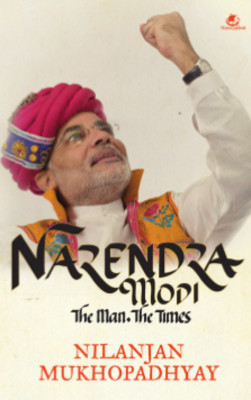
Narendra Modi- The Man, The Times by Nilanjan Mukhopadhyay

These days in any article or news report on Narendra Modi, there has to be a statement about the acute polarization the man has caused in the society. The extreme reactions caused by the CM of Gujarat is unprecedented. The situation is like either you are with him or against. On one side many abhor him as the perpetrator of mass murder and a dictator in making. Others consider him a visionary, messiah of Gujarat and the only person capable of taking India forward. One natural aftermath of this is that readership of articles and books on Modi, for or against him has increased. Everyone are cashing in on this trend and are writing and publishing more on him. This, I think will explain the sudden demand of biographies on Modi.

Narendra Modi, The Man, The Times is an unauthorized biography by the journalist Nilanjan Mukhopadhyay. Though the author is a critic of Modi for events during and after Godhra riots, he has assured readers he will not be writing a prejudiced piece and the book will be rather an attempt to look into the mind of Modi in a balanced way. The book gives a historical background of the political ideology based on Hindutva that Modi believes and endorses. After that it describes the childhood of Modi, his education, how he was attracted to Sakha, joining in a tender age and then the ups and downs of his political career, which he has pursued after leaving his family, wife (?) and village, till 2012.

The book tries very hard to analyze the enigma about Modi through the interviews with him, his colleagues and adversaries, through countless media reports about him and observing his personal life and interests. The biography succeeds in making the reader acquainted to the personality of Narendra Modi. It gives a clear picture of political and social situations in Gujarat that lead to the ascend of Modi to power and his sustaining it. And to his credit, most of the times the author tries to balance his aversion to the ideology of Modi and Sangh Parivar and succeeds. There is no slandering, no sensationalization or mud stinging to be found in the 400 page book.

But there are some passages in the book, that can pose doubts to a careful reader. After organising Ekta Yatra, Modi was forced to stay away from Gujarat. Keshubhai Patel, then CM of Gujarat, as per the author was a total failure due to corruption and inefficiency. When the party decided to take him down, as per the author, Modi had pulled the strings. But there is nowhere mentioned any proof for it. There are times when the prejudice against Modi comes out in the most silly manner. Like, when detailing his routine, Modi claims himself a workaholic and says he sleeps only 4 hours a day. Author is quick to exclaim it is his hunger for power that makes Modi work hard! Another instance is the quick conclusion that Modi's childhood experience in acting on stage is the basis of his oratory skill and all that he does on stage is a carefully planned act.

One more peculiar aspect that I noticed while reading this book is that most of the criticisms  quoted against Modi comes from his discontent ex-colleagues like Sanjay Joshi or Keshubhai Patel or some other source who wants to remain anonymous. While lot of criticism is heaped on Modi, quite convincingly by rival party members and media, Mukhopadhyay uses them sparingly. Is it part of the balancing act? Narendra Modi's biography by Nilanjan Mukhopadhyay is beneficial for readers who want to know more about this man who is grabbing headlines like no other politician in the country has ever done recently. I would recommend a little reading between the lines though.

*This post is not for or against Modi, its just about the book and what I felt after reading it.

Friday, March 16, 2012

Salman Rusdie's Jaguar Smile: A journey to Nicaragua


The Jaguar Smile is a travelogue by Salman Rushdie written after his trip to Nicaragua in 1987. A word of caution to anyone who picks up the book for reading: it would be netter to brush up your awareness of political situation in Nicaragua at the time because author does not bother to introduce us to it. I was lucky as I had read Nom Chomsky’s book Deterring Democracy some time back in which a whole chapter was dedicated to detail the struggle for power between Sandinistas and Contras.

Sandinistas were the group that formed government in Nicaragua under the leadership of Daniel Ortega after pushing the dictator Somoza out of power. They were at first supported by US and had a developmental outlook towards the country. Later US accused them for helping rebels in El Salvador and sanctions were imposed. A group of counter revolutionaries named Contra were formed, aided by CIA to oppose Sandinistas. Thus the war started between Sandinistas and Contras, who adopted guerilla warfare. Contras received financial and technological aid from CIA and there are proof that CIA instigated terrorist attack against civilians. Public outcry against the human right violations by Contras forced US government to stop aiding them, but lot of illegal funds from selling arms and drugs were channeled to the help of Contras. Bombing of Nicaraguan harbors by CIA caused Sandinistas to give a case against US in international court, which told US to give a hefty sum as compensation. It was never given.

Elections were run in Nicaragua which were deemed free and fair by United Nations and many other agencies of foreign governments except US.  Sandinistas ruled till 1990 when they announced election. By the time the economy and law and order in Nicaragua was totally collapsed due to sanctions. Contras promised stability in economy and law and order if they gain power. Though Sandinistas had majority in exit polls, after elections contras came into power. After many years Sandinistas were able to regain power and Ortega is still the President of Nicaragua.      

Rushdie went to Nicaragua with the invitation from Sandinistas. In this travelogue he writes about his experiences in the country and the political situation he faced there. Now, from the outset it is clear that Rushdie is sympathetic to Sandinista cause. At first he is little concerned about the lack of freedom of press and censorship he saw there. But gradually he gets convinced that in a country in war there has to be certain restrictions. Rushdie mentions about many important people who has contributed to the growth of Sandinistas, like Sandino on whose name Sandinistas was derived. He meet many Sandinista elite, most of them having strong literary inclinations, like novelist Sergio Ramirez, who was then Vice President. He interacted with people from many walks of life, from President Ortega to common peasants. He is impressed by the developmental works happening in the countryside, like land reforms.

The Jaguar Smile is a short travelogue cum political commentary written with a heartfelt conviction by Rushdie. The tone of the book is very poetic. The book was written after taking a break from writing his most controversial work The Satanic Verses. Probably this book and his support to Sandinistas may be the reason he never received any support from US government or the cultural fraternity there.

Buy the book :

Wednesday, February 15, 2012

Comrade Jesus, Reverent Marx and Black Mass


One controversy that ruled Kerala for the last couple of weeks was the attempt of Communist party to hijack Jesus Christ to their side. This happened when, on the posters displayed in public places announcing a party convention, along with the stock presence of Marx, Lenin and the like, Christ was also given a place. Church and staunch Christian believers raised their objections and were concerned that this was a move to influence Christian voters. The Party declaration claimed that Christ was also a Communist because of his ideology that favored the downtrodden. Everyone suddenly joined sides, as is usual in Kerala, and there was a lot of mud slinging for days together. 

I personally feel that CPM had in their minds the votes of Christian community, because they had used the same ploy before by giving place in party posters for Swamy Vivekananda and Sree Narayana Guru when there was a fallout of Hindu voters when BJP came to power in center. That time also the social reformist ideology of these great men was used to justify the addition.

The attempts to marry Communism and Christianity is not new. There was a branch of philosophy called Christian Communism which says that teachings of Jesus Christ is essentially Communist in nature and Christianity in its pure form is communism. Present Christian Communists trace back the ancestry of the philosophy to the period of Apostles. They believes that Capitalism as a social system is evil and it should be forcefully converted to Socialism and then to Communism, but they disagrees in the way this has to be achieved and the resultant community has to be organised.


A few weeks back I was reading this interesting book called Black Mass by John Gray that tried to find the similarities between many of the important movements in human history, millenialistic movements as he terms them, and how they have made us, especially the West far away from confronting any situation realistically. It is an alternate reading of history. According to him all the modern religion and philosophy has a Utopian solution for all the problems. Through a struggle, it may be violent or not, the entire system is toppled and a new system will emerge and from then on wards everything will be ideal. This is the basic ideology of modern religions like Christianity and radical Islam, Enlightenment movements of Europe like French and British Revolutions, Communism and revolutions in Russia and China and a recent example being the crusade of US and UK for importing democracy to third world countries. All these movements make their ultimate goal an unattainable Utopia, and the price to achieve it will be tremendous. And as it is an unattainable goal, the result will be doom. 


As for what to be done to counter the work of Communist in Kerala to drain the believers, Church can consider recommending sainthood for Karl Marx. Or better will be for Karat and Achuthanandan...

Saturday, September 3, 2011

Are They Deterring Democracy?

United States of America is a nation that has launched attacks on several other countries from the time of its inception. The reason told for most of them is safeguarding democracy. A common factor that can be noticed about most of these attacks is the fact that they were against third world nations endowed with rich natural resources. Is the interest of USA to upkeep the democracy in third world genuine?

Deterring Democracy is an extensive study by Nom Chomsky about interference of United States in the internal affairs of other nations. The book was written in 90's, just after the fall of Soviet Union. Till then the communist demon and its plan for world domination was cited as the major reason for invasion into third world. But even after the fall of USSR, USA continued the same policy with the pretext of saving the world by perpetuating the ideals of democracy.

The book starts with an analysis of cold war period and gradually tries to deconstruct the myth of American effort to maintain democratic practice. Chomsky quotes liberally from politicians, media, policymakers and military sources, whose quotes are in public domain, to contradict the cover up that was done to the public. The book effectively states that all these efforts in several countries were in actual effect detrimental to Free thinking and democracy and has only served to put tyrants who are sympathetic to American needs and wants into power.

Nicaragua, Panama, Vietnam, Iraq, Honduras, Costa Rica, Namibia, Columbia... The list is endless. Chomsky proves that if the rulers are ready to heed to US interests, they are given every freedom to rule however they want. But if that is not the case, even a democratic government will be toppled and someone who is ready to be a puppet will be put to the place. Business is important than human life.

US media also highlights only what the policymakers want to reveal. If a news serves the propaganda, it is highlighted and if it does not suit the purpose, it nowhere features. Many tyrants like Mussolini and Saddam were darlings of government and media when their policies were according to US interest. Once they comes on the way of making profit, immediately the demonizing starts.

What reading Deterring Democracy does is to make us wonder about the possibility of an alternative history, which is much distant and contrary to what we read in textbooks or newspapers..